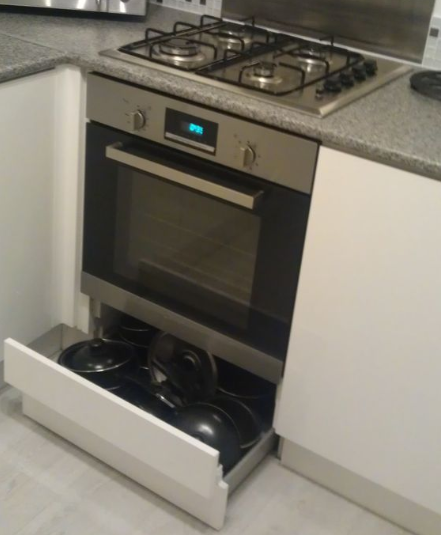
The Storage Drawer: Exactly What It Sounds Like
Finally, some stoves—particularly basic or budget-friendly models—do come with a genuine storage drawer. These drawers have no heating elements, no temperature controls, and no ventilation systems. They’re simply empty space beneath your oven designed to hold cookware, baking sheets, or whatever kitchen items you need to tuck away.
Storage drawers are the most straightforward type, but even these come with important considerations about what you should and shouldn’t store there. More on that in a moment.
How to Identify Which Type of Drawer You Have
Now that you know the three possibilities, you’re probably wondering which one is lurking beneath your stove. Here’s how to tell the difference without needing to dig out your owner’s manual.
Look for Temperature Controls
The easiest identifier is checking for dedicated controls. Warming drawers almost always have their own temperature settings somewhere on your stove’s control panel or on the drawer front itself. If you see dials, buttons, or digital displays specifically for the drawer, you’ve got a warming drawer.
Check for Heating Elements or Vents
Pull the drawer completely out and look inside the cavity. Warming drawers typically have heating elements at the bottom or sides and may have vents for air circulation. If you see what looks like heating coils or elements, it’s definitely not meant for storage.
Broiler drawers will have a rack system and you’ll see the heat source at the top of the compartment when you look inside. Many will also have a distinctive broiler-specific design with heat shields or reflectors.
Consult Your Manual or Model Number
The most definitive way to know is checking your stove’s documentation. If you don’t have the physical manual, you can almost always find it online by searching your stove’s brand and model number. The model number is usually located on a metal plate somewhere on your stove—check the front frame behind the drawer, inside the oven door, or on the back of the unit.
The Heat Test
As a last resort, you can do a simple test. Turn on your oven and let it heat up for about 15 minutes. Then carefully feel the drawer by touching it briefly with your hand. If the drawer gets noticeably warm, it’s likely a warming drawer or broiler. A true storage drawer should remain relatively cool even when the oven is on, though it might be slightly warm due to proximity.
Why Using Your Drawer Correctly Actually Matters
You might be thinking, “Does it really matter if I store pans in my warming drawer?” The answer is yes, and here’s why proper use is more important than you might think.
Safety Concerns with Misuse
Storing items in a warming drawer or broiler creates genuine safety hazards. Plastic containers, wooden utensils, paper products, or anything flammable can melt, warp, or even catch fire if you accidentally turn on the drawer without remembering what’s inside. Even metal items can become dangerously hot to touch.
I’ve heard stories from friends who stored plastic cutting boards in what they thought was a storage drawer, only to turn on the oven and smell burning plastic as the warming drawer activated automatically with the oven. Not only is this dangerous, but it creates toxic fumes and ruins your cookware.
Energy Efficiency and Performance
Blocking ventilation in a warming drawer can affect how efficiently your entire stove operates. These drawers are designed with specific airflow patterns, and cramming them full of pots and pans disrupts that design. This can lead to uneven heating, increased energy use, and even shortened appliance lifespan.
Missing Out on Functionality
Perhaps most importantly, if you’re using a warming drawer for storage, you’re missing out on an incredibly useful feature! Warming drawers can transform your cooking routine, especially when entertaining or preparing holiday meals where timing is everything.
How to Properly Use Each Type of Drawer
Making the Most of Your Warming Drawer
If you’ve discovered you have a warming drawer, here’s how to use it like a pro. First, familiarize yourself with the temperature settings. Lower temperatures (around 140-170°F) are perfect for bread, rolls, and delicate items. Medium settings (170-190°F) work well for vegetables, casseroles, and most cooked foods. Higher settings (190-200°F) are ideal for fried foods or items you want to keep especially hot.
Always place food in oven-safe dishes when using the warming drawer. Cover dishes with lids or aluminum foil to retain moisture, especially for foods that tend to dry out. You can safely keep food warm for up to two hours, though most foods taste best if served within an hour.
Many warming drawers can also handle other tasks. You can proof bread dough by setting the temperature to low—the warm, enclosed space creates the perfect environment for yeast to work its magic. Some people use warming drawers to dry herbs, warm dinner plates before serving, or even soften butter for baking.
Mastering Your Broiler Drawer
If you have a broiler drawer, embrace this vintage feature! It’s excellent for cooking thinner cuts of meat, broiling fish, toasting garlic bread, or finishing dishes with a browned top. The closer proximity to the heat source compared to an overhead broiler gives you more control.
Always preheat the broiler for about five minutes before cooking. Use the sliding rack to adjust the distance between your food and the heat source—closer for quick searing, farther for more gentle cooking. Never line the broiler drawer with aluminum foil as this can cause dangerous heat buildup and fire hazards.
Keep the drawer slightly ajar during broiling to allow heat and smoke to escape, and never leave broiling food unattended. Things can go from perfectly golden to burnt surprisingly quickly.
Smart Storage Drawer Organization
If you’ve confirmed your drawer is truly meant for storage, use it wisely. Store heavy, heat-resistant items like cast iron skillets, baking sheets, pizza stones, and metal roasting pans. These items won’t be damaged by residual heat from the oven above and they make logical sense to store near where they’ll be used.
Avoid storing anything plastic, wooden, or made of materials that could melt or warp. Don’t stuff the drawer so full that you can’t easily access what you need—this defeats the purpose of convenient storage. Consider using drawer dividers or organizers to keep items from sliding around every time you open and close the drawer.
Common Myths and Misconceptions About Stove Drawers
Myth: All Bottom Drawers Are for Storage
This is the biggest misconception and the reason so many people misuse this feature. While many people grow up seeing family members use the drawer for storage, that doesn’t mean it was designed for that purpose. Always verify your specific model’s intended use.
Myth: Warming Drawers Use a Lot of Energy
Actually, warming drawers are quite energy-efficient compared to keeping your main oven on low or constantly reheating food in the microwave. They’re insulated and designed to maintain temperature with minimal energy use.
Myth: You Can’t Use a Warming Drawer with the Oven On
Most warming drawers can operate independently or simultaneously with your main oven. In fact, they’re designed with this very scenario in mind—cooking in the oven while keeping finished dishes warm in the drawer below.
Myth: Broiler Drawers Are Obsolete
While less common in modern stoves, broiler drawers offer unique advantages. The lower position provides easier access and better visibility compared to overhead broilers, and many experienced cooks prefer them for certain tasks.
Maintaining Your Stove Drawer Properly
Regardless of which type of drawer you have, proper maintenance keeps it functioning well and safely.
Regular Cleaning
Clean your drawer regularly, especially if it’s a warming or broiler drawer. Food particles and grease buildup can create smoke, odors, and fire hazards. For warming drawers, use gentle cleaners and avoid abrasive scrubbing that might damage any non-stick surfaces. Broiler drawers need more aggressive cleaning due to grease splatter—use a degreaser and scrub brush for stubborn spots.
Checking Seals and Gaskets
Warming drawers often have seals or gaskets that help maintain consistent temperature. Check these periodically for wear, cracks, or damage. Damaged seals can make the drawer less efficient and may need replacement.
Removing and Replacing the Drawer
Learn how to properly remove and reinstall your drawer for deep cleaning. Most drawers have a release mechanism—you lift slightly while pulling, or press buttons on the sides. Refer to your manual for the specific method for your model. Being able to remove the drawer makes cleaning the cavity behind it much easier.
When Your Drawer Isn’t Working Properly
If you have a warming drawer that’s not heating, first check the obvious: make sure it’s actually turned on and that any circuit breakers haven’t tripped. If those aren’t the issue, you may have a faulty heating element or temperature sensor that needs professional repair.
For broiler drawers that aren’t heating properly, the issue might be with the main oven’s heating system since broiler drawers share the same heat source in many models. Gas broiler drawers may have ignition issues that require a technician.
Storage drawers rarely malfunction, but they can develop problems with the glide mechanism. If your drawer sticks or doesn’t open smoothly, check for obstructions, clean the track, and apply a small amount of appropriate lubricant to the slides.
Making the Switch: Transitioning Your Drawer Use
If you’ve just discovered your drawer isn’t what you thought it was, don’t worry—making the transition is straightforward. Start by emptying everything out and cleaning the drawer thoroughly. If it’s a warming or broiler drawer you’ve been using for storage, inspect it carefully for any damage that might have occurred.
For items you’ve been storing in the drawer, find new homes. Consider installing a pot rack, using cabinet organizers, or even adding a standalone kitchen storage unit if needed. The initial reorganization effort is worth it for the safety and functionality you’ll gain.
The Bottom Line on Your Bottom Drawer
Understanding what the drawer under your stove is really for isn’t just about using a kitchen feature correctly—it’s about safety, efficiency, and making the most of your appliances. Whether you’ve discovered you have a convenient warming drawer, a powerful broiler, or simply confirmed that your storage drawer is indeed meant for storage, you now have the knowledge to use it properly.
Take a few minutes today to identify your drawer type and make any necessary changes to how you’re using it. Your future self will thank you the next time you’re juggling multiple dishes and need to keep something warm, or when you want to perfectly broil a steak without bending over to peer into an overhead broiler.
That humble drawer beneath your stove might be small, but when used correctly, it can make a surprisingly big difference in your cooking experience. Now that you know its true purpose, you’re equipped to use this often-overlooked kitchen feature the way its designers intended.
