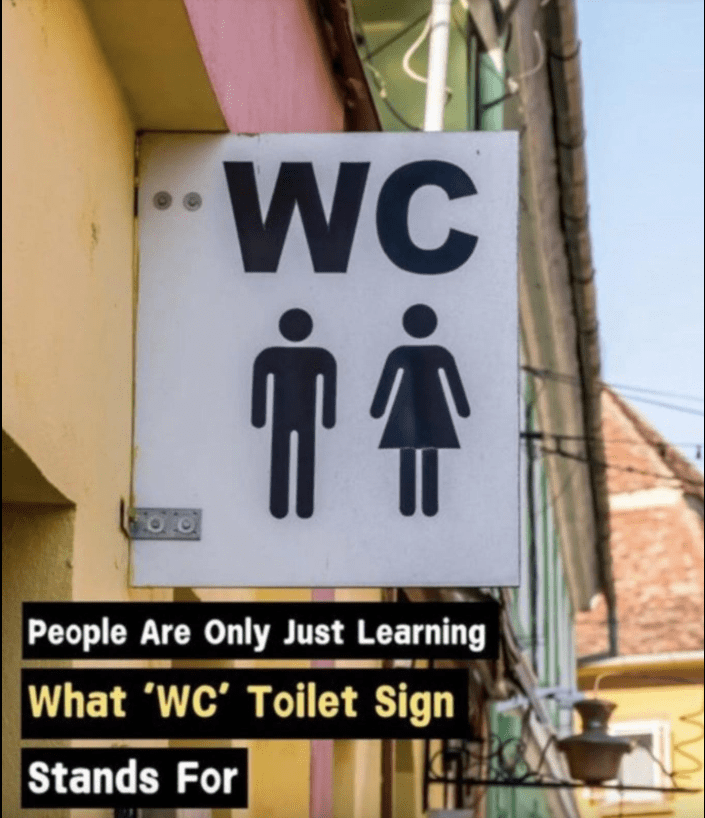
Where Did the Water Closet Term Come From? 🏠💧
To understand why this term became popular, we need to take a tiny step back in history.
The Origin of the Term
During the Victorian era in England, indoor plumbing became more common in middle-class homes. Families needed a polite word for the new flushing toilet rooms — and Victorian society loved a refined vocabulary. The term “closet” simply meant a small room or private space, while adding “water” referred to the plumbing.
So “water closet” described a private room equipped with a modern flushing toilet — a big upgrade at the time!
Why the Term Spread Worldwide 🌍
What started in the UK quickly made its way across Europe and other regions where English influence was strong. Hotels, train stations, and restaurants adopted “WC” on signs because:
- It was short
- It was easy to recognize
- It avoided using the word “toilet,” which was once considered impolite
Even today, travelers often find the WC sign more universal than local language terms.
Why Do We Still See WC Signs Today? 🤔
You might wonder: if modern words like “restroom,” “bathroom,” and “toilet” are widely used, why keep “WC”?
Here are some reasons the sign hasn’t disappeared:
1. International Travelers Recognize It
Even if someone doesn’t speak the local language, they probably know that WC means toilet. It’s a safe, universal indicator.
2. It Works for Small Signs
WC is short, simple, and fits easily on compact signage — especially in narrow hallways, parks, or older buildings.
3. Some Regions Still Prefer It
In many European countries, “WC” remains the standard term. You’ll see it everywhere in countries like Germany, France, Romania, Hungary, and parts of Scandinavia.
4. Tradition and Simplicity
Sometimes the old ways stick simply because they work. WC has been around for more than 150 years — and it still gets the job done.
Common Misunderstandings About the WC Sign 😅
Despite seeing it all the time, many people guess it stands for something else. Here are the funniest and most common misconceptions:
“Women’s Convenience” or “Women’s Corner”
A surprising number of people think the sign refers only to the ladies’ room!
“Washroom Center”
A close guess, but not quite.
“Waste Control”
Creative… but definitely not the intended meaning.
These misunderstandings are exactly why people are often shocked when they discover the simple truth behind the abbreviation.
Is the WC Sign Still Needed in Modern Times? 🚻✨
Many newer buildings prefer universal icons without letters — simple silhouettes that represent men, women, or all-gender restrooms. These are easier to understand at a glance and work across cultures.
However, WC remains incredibly common, especially in:
- Train stations
- Airports
- Old towns and historic districts
- Tourist spots
- European urban centers
The charm and familiarity of WC signs mean they’re unlikely to disappear anytime soon.
How WC Differs From Other Toilet Terms 💡
Let’s clear up some quick differences between all the restroom-related words we hear today:
Toilet
Refers to the actual bowl or the room — depending on the region.
Restroom
Commonly used in the US, emphasizing the room rather than the fixture.
Bathroom
Can refer to a room with a bath or shower (especially in households).
Loo
A friendly British slang term.
WC
A traditional, widely recognizable abbreviation used in public spaces worldwide.
Each has its own cultural flavor, but WC stands out because of its international reach.
Final Thoughts: A Small Sign With a Big History 🚪✨
The next time you see the familiar WC sign while traveling or wandering around town, you’ll know you’re actually looking at a piece of history — a reminder of how far public sanitation and indoor plumbing have come.
Most public toilets have a ‘WC’ sign outside, but no one seems to know what it means until they dig into the history. Now you do! 😉
A tiny abbreviation, a century-old origin, and a universal purpose — that’s the story behind the humble WC sign.
