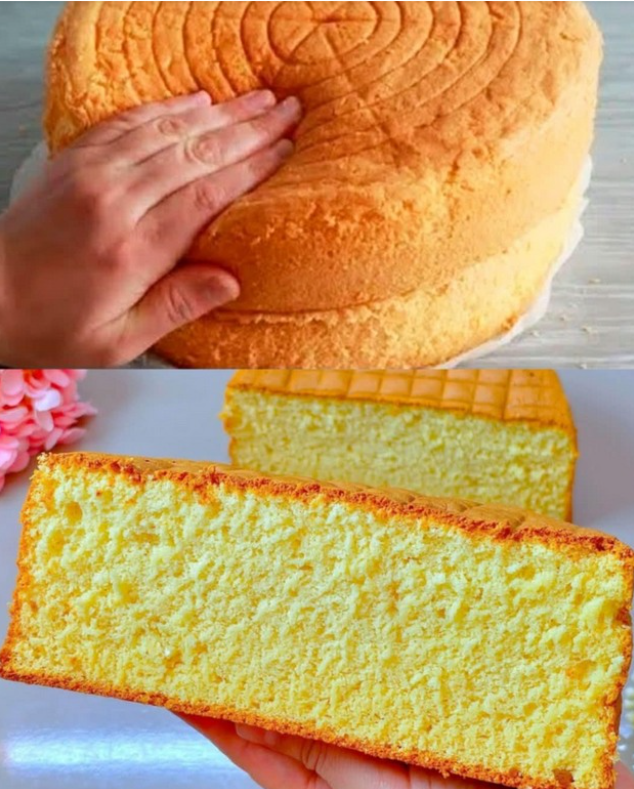
The Power Trio: Eggs, Sugar, and Flour
- Eggs: These are the secret ingredient. When whole eggs are beaten vigorously with sugar, they trap an incredible amount of air, transforming into a thick, pale, voluminous foam. This foam is what provides the lift—no baking powder or soda required!
- Sugar: Not only does it provide sweetness, but the sugar crystals help to gently scrape the egg proteins, encouraging better aeration and stability during the whipping process.
- Flour: This provides the structure. It must be folded in gently to avoid deflating the egg foam, which would result in a dense, disappointing cake. Using a low-protein flour, like cake flour, can yield an even softer crumb, though all-purpose flour works perfectly well.
In essence, this recipe is a masterclass in minimalist baking. It teaches you to respect the raw ingredients and hone your mixing technique.
👩🍳 Step-by-Step Preparation: The Key to Air
The success of this light and tender Sponge Cake hinges entirely on the proper preparation of the eggs. Follow these steps meticulously for the best results.
Ingredients:
- 4 large Eggs (room temperature is best)
- 100g Granulated Sugar (approx. $1/2$ cup)
- 100g All-Purpose Flour (approx. $3/4$ cup, sifted)
Equipment:
- 8-inch round cake pan
- Electric stand mixer or hand mixer
- Rubber spatula
Instructions:
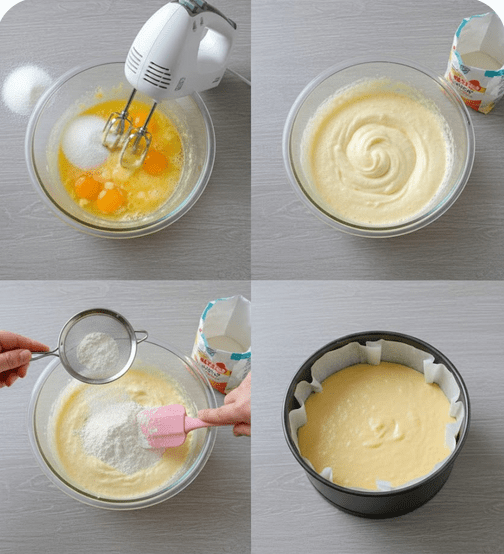
- Preheat and Prep: Preheat your oven to 170°C (340°F). Line the bottom of your 8-inch cake pan with parchment paper. Do not grease the sides; the batter needs a surface to cling to as it rises.
- Whip the Eggs and Sugar: Place the eggs and sugar in a large, clean mixing bowl. Using an electric mixer on medium-high speed, beat the mixture for at least 8 to 10 minutes. The goal is to reach the “ribbon stage.” The batter should be pale yellow, significantly increased in volume (tripled in size), and when you lift the whisk, the mixture should fall back into the bowl in a thick ribbon that holds its shape on the surface for a few seconds before dissolving. This is the crucial step!
- Fold in the Flour: Sift the flour directly over the egg mixture in three separate additions. Using a rubber spatula, gently fold the flour into the egg foam. Use a cutting motion, slicing down the center and sweeping the mixture up from the bottom of the bowl. Be careful not to overmix, as this will deflate the air you worked so hard to incorporate.
- Bake: Pour the batter immediately into the prepared pan. Bake for 25 to 30 minutes, or until the top is golden brown and springs back lightly when touched.
- Cooling: Immediately invert the pan onto a wire rack and let it cool completely. This prevents the cake from collapsing on itself. Once cool, run a thin knife around the ungreased edge of the pan to release the cake.
💡 Practical Insights for Sponge Cake Success
Why Did My Cake Fall Flat?
This is the most common issue when baking a sponge. There are two primary culprits:
- Under-whipping the Eggs: If the egg and sugar mixture did not reach the full ribbon stage, it simply does not have enough trapped air to support the cake’s structure.
- Over-mixing the Flour: Once the flour is added, aggressive mixing will break the delicate air bubbles in the egg foam, releasing the trapped air and causing the batter to deflate before it even hits the oven. Always be gentle and fold just until the flour disappears.
A fun fact: This egg-based aeration technique dates back centuries! Recipes for cakes relying solely on whipped eggs (predecessors to the modern sponge) were documented as early as the mid-17th century, a testament to the simplicity and genius of the method.
Serving Suggestions
Because this Sponge Cake is essentially a blank canvas, the possibilities are endless!
- Classic: Split the cake and fill it with freshly whipped cream and seasonal berries (strawberries or raspberries are divine 🍓).
- Simple Glaze: Brush the cake lightly with a simple sugar syrup (equal parts sugar and water boiled then cooled) to keep it moist, and top with a dusting of powdered sugar.
- Decadent: Slice it into layers and soak with coffee or citrus syrup for Tiramisu or Lemon Curd cake.
A Light, Airy Conclusion
Baking doesn’t need to be complicated to be rewarding. This Simple 3-Ingredient Sponge Cake proves that with a little patience and the right technique, you can create a centerpiece dessert that is incredibly light, moist, and versatile. It’s a fundamental recipe every baker should master.
So, go on—give it a try and feel the satisfaction of watching that simple batter transform into a beautifully fluffy cake. What delicious filling or topping will you choose for your first perfect sponge? Let me know in the comments! 👇
