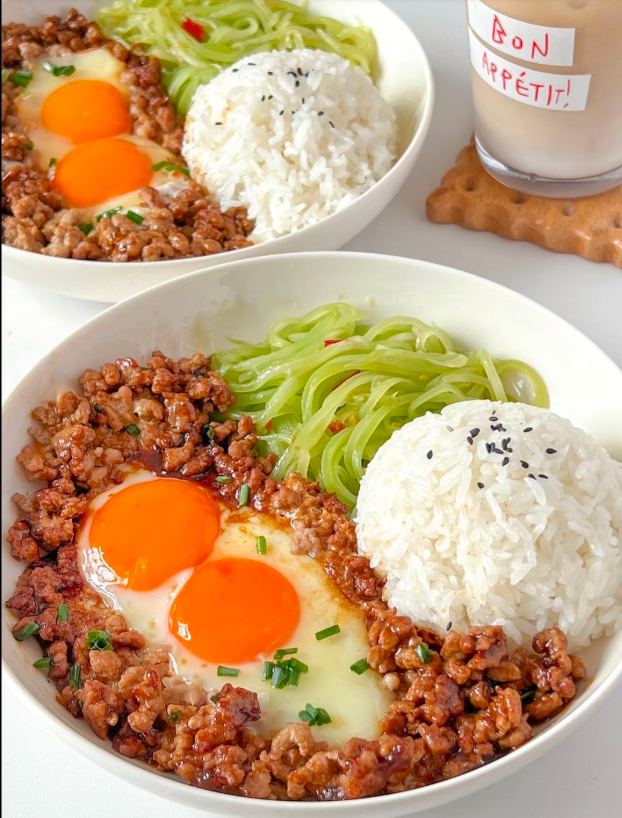
The Foundation
- 2 cups cooked white or brown rice (day-old works perfectly)
- 2-3 large eggs
- 2 tablespoons cooking oil (vegetable, sesame, or olive oil)
- Salt and black pepper to taste
Flavor Enhancers
- 2 tablespoons soy sauce or tamari
- 1 teaspoon sesame oil
- 1 clove garlic, minced
- 1 green onion, thinly sliced
- 1 teaspoon rice vinegar
- Sesame seeds for garnish
Optional Additions
- Sautéed vegetables (spinach, mushrooms, bell peppers)
- Kimchi or pickled vegetables
- Sliced avocado
- Crispy bacon or ham
- Fresh herbs (cilantro, basil, or Thai basil)
- Chili oil or sriracha for heat
Cooking the Perfect Fried Egg
Achieving Crispy Edges with a Runny Yolk
The star of any rice bowl with fried eggs is, of course, the egg itself. Here’s how to get it just right. Heat your pan over medium-high heat and add enough oil to create a thin layer across the bottom. The oil should shimmer but not smoke—that’s your sweet spot.
Crack your egg directly into the pan. You’ll immediately hear that satisfying sizzle. The whites should start setting around the edges within seconds. This is when the magic happens: tilt the pan slightly and use a spoon to baste the top of the egg with the hot oil. This technique cooks the top without flipping, ensuring that runny yolk stays intact while the whites cook through completely.
For extra crispy, lacy edges—the kind that shatter delightfully when you break into them—use a bit more oil than you think you need. Those crispy edges add incredible texture contrast to the soft rice.
Timing Is Everything
Cook your egg for about 2-3 minutes for a runny yolk, 4 minutes for medium, and 5-6 minutes for fully set. I always aim for that perfect middle ground where the yolk is still liquid gold but the whites are completely cooked with no translucent bits remaining.
Preparing Your Rice Base
Why Day-Old Rice Works Better
Fresh, just-cooked rice tends to be too moist and sticky for rice bowls. Day-old rice that’s been refrigerated dries out slightly, making individual grains separate more easily. This creates better texture and allows the rice to absorb sauces without becoming mushy.
If you’re starting with freshly cooked rice, spread it on a baking sheet and let it cool completely, or even pop it in the refrigerator for 30 minutes. This quick cooling helps remove excess moisture.
Warming and Seasoning Your Rice
I prefer to quickly fry my rice before building the bowl. Heat a tablespoon of oil in a large skillet or wok over medium-high heat. Add your cold rice, breaking up any clumps with a wooden spoon. Stir-fry for 3-4 minutes until the rice is heated through and some grains start getting slightly crispy.
This is the perfect time to add minced garlic, a drizzle of soy sauce, and a splash of sesame oil. The rice absorbs these flavors beautifully, transforming from plain to restaurant-quality in minutes.
Building Your Perfect Rice Bowl
The Layering Technique
Start with your warm, seasoned rice as the base—about one and a half to two cups per serving. Create a slight well in the center where your egg will sit. This prevents the egg from sliding off when you’re eating and ensures every bite gets some of that precious yolk.
Place your perfectly fried egg right in that center well. The sight of that golden yolk perched atop fluffy rice is genuinely beautiful in its simplicity.
Adding Complementary Elements
Now comes the fun part—customizing your rice bowl with fried eggs to match your mood and what’s available in your kitchen. Arrange your add-ins around the egg rather than just dumping everything on top. This creates visual appeal and allows you to control your bite composition.
I often add a small handful of sautéed spinach, a few slices of avocado, and a generous spoonful of kimchi. The combination of temperatures, textures, and flavors turns this simple dish into something special.
Sauce Options That Elevate Everything
Classic Soy-Based Sauce
Mix together two tablespoons of soy sauce, one teaspoon of sesame oil, one teaspoon of rice vinegar, and a pinch of sugar. This creates a balanced sauce that’s salty, nutty, slightly sweet, and tangy. Drizzle it around the bowl, not directly on the yolk—you want to preserve that for the dramatic moment when you break it.
Spicy Gochujang Sauce
For heat lovers, combine one tablespoon of gochujang (Korean red pepper paste) with one tablespoon of soy sauce, one teaspoon of honey, and one teaspoon of sesame oil. Thin it with a small splash of water if needed. This sauce brings complex heat and umami that pairs incredibly well with the richness of the egg yolk.
Simple Butter and Soy
Sometimes the best flavors are the simplest. A small pat of butter melting into hot rice, finished with a splash of good quality soy sauce, creates magic. The butter adds richness while the soy provides that essential savory depth.
Vegetable Additions That Work Best
Quick Sautéed Greens
Spinach, bok choy, or kale take just minutes to wilt in a hot pan with a bit of garlic. These greens add nutritional value, color, and a slight bitterness that balances the rich egg and starchy rice perfectly.
Raw Vegetables for Crunch
Thinly sliced cucumber, shredded carrots, or radishes provide refreshing crunch. I like to toss them quickly in rice vinegar with a pinch of salt—this quick pickle adds brightness to every bite.
Roasted or Grilled Options
If you have time, roasted broccoli, grilled zucchini, or caramelized mushrooms bring deeper, more complex flavors to your rice bowl with fried eggs. These can be prepared in larger batches and stored in the fridge, making weekday assembly even faster.
Protein Additions Beyond Eggs
Crispy Tofu Cubes
Pan-fried tofu cubes add plant-based protein and textural variety. Cut firm tofu into cubes, pat dry, dust with cornstarch, and fry until golden and crispy. They provide satisfying bite and soak up whatever sauce you’re using.
Leftover Proteins
This rice bowl is perfect for using up last night’s dinner. Shredded rotisserie chicken, sliced steak, grilled salmon, or even pulled pork all work wonderfully. Just warm them briefly and add them to your bowl.
Bacon or Ham
For a breakfast-style rice bowl with fried eggs, crispy bacon or diced ham adds smoky, salty goodness. Cook these first, then use the rendered fat to fry your eggs for extra flavor.
Regional Variations Worth Trying
Korean-Inspired Bowl
Top your rice bowl with fried eggs, kimchi, sautéed spinach, shredded carrots, sliced cucumber, and a dollop of gochujang. Sprinkle with sesame seeds and sliced nori for an authentic Korean breakfast experience.
Japanese Style
Keep it minimal with perfectly cooked white rice, a beautifully fried egg, a drizzle of soy sauce, and furikake seasoning. Sometimes simplicity is the ultimate sophistication.
Thai-Influenced Version
Add fresh Thai basil, sliced chilies, a squeeze of lime, and a splash of fish sauce. Top with crispy fried shallots for textural contrast. This version brings bright, bold flavors that wake up your taste buds.
Chinese-Inspired Approach
Stir-fry your rice with frozen mixed vegetables, add a fried egg on top, and finish with oyster sauce and white pepper. Quick, satisfying, and reminiscent of Chinese takeout at its best.
Timing Your Meal Preparation
The 15-Minute Method
If you have leftover rice ready to go, you can have a complete rice bowl with fried eggs on the table in about fifteen minutes. While your rice reheats, prepare any quick vegetables and mix your sauce. Fry your egg last so it’s piping hot when served.
Meal Prep Strategy
Cook a large batch of rice at the beginning of the week. Portion it into individual containers. Prep and store your vegetables separately. When it’s time to eat, you’re just reheating rice and frying an egg—dinner in under ten minutes.
Nutritional Benefits of This Simple Meal
Balanced Macronutrients
A rice bowl with fried eggs provides a solid balance of carbohydrates from the rice, protein and healthy fats from the eggs, and various micronutrients depending on your vegetable additions. It’s a complete meal that fuels your body properly.
Budget-Friendly Nutrition
Rice and eggs are among the most affordable protein and carbohydrate sources available. Even when you add vegetables and condiments, this meal typically costs less than three dollars per serving—far cheaper than any takeout option.
Customizable for Dietary Needs
This basic concept adapts easily to different dietary requirements. Use brown rice or cauliflower rice for lower glycemic impact. Add extra vegetables for more fiber. Include additional protein sources if you’re highly active.
Common Mistakes to Avoid
Using Too Much Liquid
The biggest error people make is adding too much sauce, which turns the rice soggy and unpleasant. Start with less than you think you need—you can always add more, but you can’t remove excess liquid.
Overcooking the Egg
An overcooked egg with a chalky, dry yolk defeats the purpose. That runny yolk is essentially your sauce, so preserve it. If you’re nervous about undercooking, aim for a jammy yolk that’s set on the edges but still soft in the middle.
Forgetting to Season
Rice needs salt. Eggs need pepper. Don’t rely solely on soy sauce to provide all your seasoning. Layer flavors by seasoning at each step of preparation.
Storage and Reheating Tips
Storing Components Separately
If meal prepping, store your rice, cooked vegetables, and prepared proteins in separate containers. Never store a fried egg—always cook that fresh. The components will keep for 3-4 days in the refrigerator.
Best Reheating Practices
Reheat rice in the microwave with a damp paper towel on top to prevent drying. Alternatively, quickly stir-fry it in a pan with a tiny bit of water or oil. This method actually improves the texture.
Making It Special for Guests
Presentation Matters
Serve your rice bowl with fried eggs in a wide, shallow bowl that shows off all the beautiful components. Arrange ingredients thoughtfully rather than just piling everything on. Garnish with fresh herbs, sesame seeds, and a drizzle of sauce in a decorative pattern.
Create a Rice Bowl Bar
For casual entertaining, set up a rice bowl station with warm rice, various toppings, different sauces, and let guests build their own. Provide fried eggs or teach guests to fry their own. It’s interactive, fun, and ensures everyone gets exactly what they want.
Why This Meal Works Any Time of Day
Breakfast Champion
A rice bowl with fried eggs provides sustained energy better than sugary cereals or pastries. The combination of complex carbohydrates and protein keeps you full until lunch without that mid-morning crash.
Lunch Box Ready
Pack room-temperature rice with cold toppings in separate compartments. At lunchtime, microwave the rice and add your toppings. Bring a small container of sauce to add just before eating.
Dinner Simplicity
After a long day, this meal comes together faster than ordering delivery. It’s substantial enough to satisfy dinner appetites while being light enough that you won’t feel weighed down before bed.
Late Night Comfort
There’s something deeply comforting about a bowl of warm rice with a fried egg at night. It’s the ultimate comfort food that doesn’t leave you feeling guilty or overly full.
The Satisfaction Factor
What keeps me returning to rice bowls with fried eggs over and over is the pure satisfaction they provide. There’s the visual satisfaction of watching that golden yolk break and coat the rice. The textural satisfaction of crispy egg edges meeting soft rice. The flavor satisfaction of simple ingredients coming together harmoniously.
This isn’t fancy food, and it doesn’t pretend to be. It’s honest, nourishing, and exactly what you need when you want something real and satisfying without complication. That’s a kind of perfection that no elaborate recipe can match.
Whether you’re a college student learning to cook, a busy professional needing quick meals, or a home cook who appreciates simple excellence, the rice bowl with fried eggs deserves a permanent place in your rotation. Master this basic template, and you’ll never be more than fifteen minutes away from a truly satisfying meal.
