
Cooking Time and Details
| Category | Duration |
| Total Time | 1 Hour 10 Minutes |
| Prep Time | 20 Minutes |
| Cook Time | 45 Minutes |
| Cool Time | 5 Minutes |
Step-by-Step Preparation
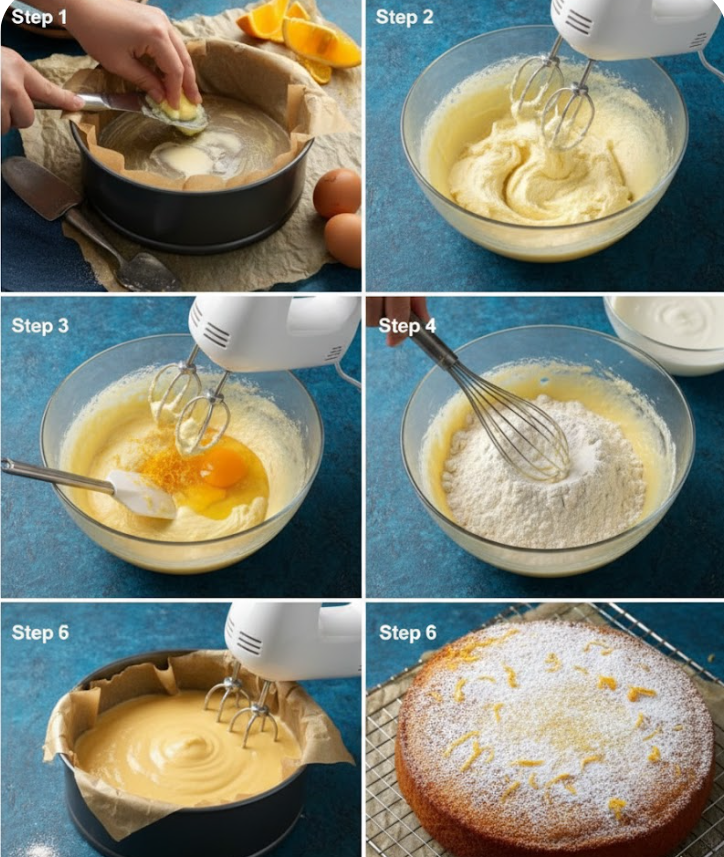
1. Preheat and Prep: Begin by preheating your oven to 175°C (350°F). Grease a 9-inch round cake pan with butter and line the bottom with parchment paper to ensure easy removal.
2. Cream the Butter and Sugar: In a large mixing bowl, beat the softened butter and granulated sugar together until the mixture is pale and fluffy. This usually takes about 3 to 5 minutes of high-speed mixing.
3. Add Aromatics and Eggs: Mix in the orange zest and vanilla extract. Add the eggs one at a time, beating well after each addition to maintain a smooth consistency.
4. Whisk Dry Ingredients: In a separate medium bowl, whisk together the flour, baking powder, baking soda, and salt.
5. Combine Wet and Dry: Lower the mixer speed. Alternately add the dry ingredients and the orange juice to the butter mixture, starting and ending with the flour. Finally, fold in the Greek yogurt until just combined.
6. Bake the Cake: Pour the batter into the prepared pan and smooth the top. Bake for 40 to 45 minutes, or until a wooden skewer inserted into the center comes out clean.
7. Cool and Serve: Let the Orange Cake cool in the pan for 10 minutes before transferring it to a wire rack. Once completely cool, dust generously with powdered sugar or top with fresh orange slices. 🍰
Why Fresh Zest Matters in an Orange Cake
When making a premium Orange Cake, the zest is actually more important than the juice for delivering punchy flavor. The outer peel contains essential oils that hold the concentrated essence of the fruit. When these oils are released into the sugar during the creaming process, they permeate the entire sponge, creating a floral and bright profile that defines a truly professional-grade bake.
Nutrition Facts (Per Serving)
- Calories: 285 kcal
- Total Fat: 11g
- Carbohydrates: 42g
- Protein: 4g
- Vitamin C: 15% DV
Serving and Storage Tips
To elevate your Orange Cake, serve each slice with a dollop of lightly sweetened whipped cream or a side of fresh berries. If you prefer a more decadent finish, a simple glaze made of powdered sugar and a splash of orange juice can be drizzled over the top while the cake is still slightly warm. 🍊
For storage, keep the cake in an airtight container at room temperature for up to 3 days. If you live in a particularly humid climate, moving it to the refrigerator will help maintain its structure for up to 5 days. You can also freeze individual slices wrapped in plastic wrap and foil for up to 3 months; simply thaw at room temperature before enjoying.
Frequently Asked Questions
Can I use bottled orange juice instead of fresh?
While bottled juice works in a pinch, fresh juice provides a much better acidity level and superior flavor for a homemade Orange Cake.
Why did my cake turn out dense?
Density usually occurs if the flour is overmixed. Once you add the dry ingredients, mix only until the flour streaks disappear to keep the crumb tender.
Can I make this recipe gluten-free?
Yes, you can substitute the all-purpose flour with a high-quality 1:1 gluten-free baking blend. Ensure the blend contains xanthan gum for the best results. ✨
The beauty of a homemade Orange Cake lies in its simplicity and the nostalgic aroma that fills the home while it bakes. By using fresh ingredients and following these careful steps, you can create a bakery-quality dessert that is as beautiful to look at as it is delicious to eat.
Do you prefer your citrus cakes with a thick frosting or a simple dusting of sugar? Share your favorite way to garnish this treat and let us know how your bake turned out!
