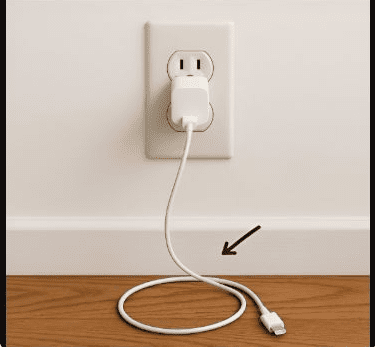
Never leave a charger in an outlet without your phone—this simple habit could be costing you money, putting your home at risk, and shortening the lifespan of your devices. Most of us are guilty of leaving phone chargers plugged into wall outlets even when we’re not actively charging our devices. It seems harmless enough, right? The charger is just sitting there, not connected to anything, so what’s the problem?
The truth is, that innocent-looking charger continues drawing power and poses several risks you’ve probably never considered. Understanding why you should unplug your chargers when not in use can help you save money, protect your electronics, and increase safety in your home. Let’s explore the three main reasons why this seemingly minor habit matters more than you think.
Table of Contents
Reason 1: Phantom Power Consumption Increases Your Energy Bills
Even when your phone isn’t connected, a charger plugged into an outlet continues to draw electricity. This phenomenon is called phantom power, vampire power, or standby power consumption. While the amount of energy each individual charger uses seems negligible, the cumulative effect across all your devices and over time adds up significantly.
How Much Energy Does an Idle Charger Really Use?
A phone charger left plugged in without a device attached typically consumes between 0.1 and 0.5 watts of power per hour. That might sound insignificant, but consider this: if you have multiple chargers throughout your home—in the bedroom, kitchen, living room, and office—and they remain plugged in 24/7, you’re wasting electricity constantly.
Let’s do the math. If you have four chargers plugged in continuously, each drawing 0.3 watts, that’s 1.2 watts per hour, or about 28.8 watt-hours per day. Over a year, those four chargers alone waste approximately 10.5 kilowatt-hours of electricity. Multiply this by the current average electricity rate, and you’re looking at several dollars per year just from phone chargers—and that’s before considering all your other electronic devices with similar standby power consumption.
The Bigger Picture: Household Energy Waste
Phone chargers represent just a fraction of total phantom power consumption in modern homes. When you factor in laptop chargers, tablet chargers, smart speakers, televisions, gaming consoles, and other electronics in standby mode, the Department of Energy estimates that phantom power accounts for 5-10% of residential energy use. For the average American household, this translates to roughly $100-$200 in wasted electricity costs annually.
By developing the habit of unplugging chargers when not in use, you’re taking a small but meaningful step toward reducing your carbon footprint and lowering your utility bills. Every little bit counts, especially when multiplied across millions of households.
Environmental Impact Considerations
Beyond your personal electricity bill, phantom power consumption has broader environmental implications. The collective energy wasted by devices in standby mode across the country requires power plants to generate additional electricity, contributing to greenhouse gas emissions and climate change. While unplugging one charger won’t solve global warming, widespread adoption of energy-conscious habits creates measurable positive impact.
Reason 2: Fire Hazard and Safety Risks
Perhaps the most compelling reason to unplug unused chargers is safety. While modern chargers include various safety features, they’re not immune to malfunction, and keeping them constantly connected to power increases the risk of electrical fires and other hazards.
How Chargers Can Become Fire Hazards
Phone chargers contain transformers and circuitry that convert alternating current (AC) from your wall outlet to the direct current (DC) your phone needs. Even without a phone connected, these components remain active when plugged in. Over time, the continuous flow of electricity through these components generates heat. In most cases, this heat dissipates harmlessly. However, several scenarios can lead to dangerous situations.
Manufacturing defects, damaged internal components, or degraded insulation can cause chargers to overheat. When a charger overheats while unattended—especially if it’s in contact with flammable materials like bedding, curtains, or paper—it can ignite a fire. While such incidents are relatively rare, they do occur, and the consequences can be devastating.
Real-World Incidents and Statistics
Fire departments across the country respond to thousands of electrical fires each year, many originating from small appliances and charging devices. The National Fire Protection Association reports that electrical failures or malfunctions account for approximately 13% of home fires. While not all of these involve phone chargers specifically, the growing number of charging devices in modern homes has contributed to increased risk.
Several documented cases involve chargers left plugged in that subsequently overheated and caused fires. In many instances, the homeowner wasn’t even aware there was a problem until smoke detectors alerted them or neighbors noticed flames. These incidents often occur at night when everyone is sleeping, making them particularly dangerous.
Counterfeit and Low-Quality Chargers Pose Greater Risks
Not all chargers are created equal. Genuine chargers from reputable manufacturers undergo rigorous safety testing and include protective features like overcurrent protection, short-circuit protection, and thermal cutoffs. Unfortunately, the market is flooded with counterfeit and cheap aftermarket chargers that lack these safety mechanisms.
These substandard chargers are significantly more likely to malfunction, overheat, or catch fire. If you’re using non-certified chargers—especially those purchased from questionable online sellers or dollar stores—the risk increases substantially. Leaving such chargers plugged in continuously compounds the danger.
Power Surges and Lightning Strikes
Another often-overlooked risk involves power surges. When lightning strikes nearby power lines or when there are fluctuations in the electrical grid, surges can travel through your home’s wiring to any connected devices. A charger plugged into an outlet provides a direct pathway for that surge energy.
While surge protectors offer some defense, an unplugged charger is completely protected. Power surges can damage the charger’s internal components, creating malfunction risks that might not be immediately apparent but could cause problems later when you actually use the charger.
Reason 3: Reduced Lifespan of Your Charger and Connected Devices
Constantly leaving your charger plugged in doesn’t just waste energy and create safety risks—it also shortens the useful life of the charger itself and potentially affects your phone’s battery health.
How Continuous Power Affects Charger Longevity
Electronic components degrade over time, and the degradation accelerates when they’re constantly energized. The transformer, capacitors, and other components inside your charger are designed to handle regular use, but continuous operation means continuous stress. Even the low-level heat generated during standby gradually breaks down insulation, solder joints, and other materials.
A charger that’s unplugged when not in use will typically last significantly longer than one that remains connected 24/7. While phone chargers aren’t particularly expensive to replace, the principle applies to all your electronic devices. Developing better habits with chargers can translate to better practices with more expensive electronics, potentially saving you hundreds of dollars in replacement costs over time.
Impact on Charging Efficiency
As chargers age and their components degrade, their efficiency decreases. An older, worn charger may take longer to charge your device, provide inconsistent power delivery, or generate more heat during use. These issues can, in turn, affect your phone’s battery health. Modern smartphones are designed to work optimally with specific charging parameters. When a degraded charger can’t deliver consistent power, it can contribute to battery wear.
The Connection to Battery Health
While leaving a charger plugged into the wall without a phone attached doesn’t directly damage your phone’s battery, the relationship between charger quality and battery longevity is real. A charger that’s been left plugged in for years may develop problems that affect how it charges your device. Inconsistent power delivery, voltage fluctuations, or excessive heat can all impact battery chemistry over time.
Additionally, developing the habit of unplugging chargers encourages you to be more mindful about charging practices in general. People who unplug chargers when not in use are also more likely to avoid leaving their phones plugged in overnight unnecessarily—a practice that, while less problematic with modern devices, still subjects batteries to prolonged time at 100% charge, which isn’t ideal for long-term battery health.
Additional Benefits of Unplugging Chargers
Beyond the three main reasons, unplugging unused chargers offers several other advantages worth considering.
Protecting Against Electrical Interference
Multiple devices plugged into outlets throughout your home can create electrical noise that interferes with other electronics. While phone chargers produce minimal interference, reducing the number of constantly energized devices in your home can improve the performance of sensitive equipment like audio systems, computers, or medical devices.
Teaching Energy Consciousness
If you have children, making a habit of unplugging chargers sets a positive example. It teaches them to think about energy consumption and resource conservation. These lessons extend beyond electricity to broader environmental awareness and responsibility.
Extending Outlet Lifespan
The contacts inside electrical outlets experience wear each time something is plugged in, but they also degrade from continuous electrical current flow. While this effect is minor, unplugging devices when not in use marginally extends the lifespan of your outlets and reduces the frequency of maintenance or replacement.
Decluttering Your Space
On a practical level, unplugging chargers when not in use makes your living spaces look cleaner and more organized. Cords hanging from outlets contribute to visual clutter. Storing chargers properly when not in use creates a neater, more intentional environment.
Practical Tips for Breaking the Habit
Knowing you should unplug chargers is one thing; actually remembering to do it is another. Here are practical strategies to help you develop this beneficial habit.
Designate Specific Charging Locations
Instead of having chargers scattered throughout your home, create one or two designated charging stations. When all your devices charge in the same location, it’s easier to remember to unplug chargers when you’re done. This also reduces the number of chargers you need overall, since one charger can serve multiple devices throughout the day.
Use Power Strips with Switches
Power strips with illuminated on/off switches make it incredibly easy to cut power to multiple chargers simultaneously. Keep your chargers plugged into the power strip, then simply flip the switch when you’re done charging. The visual indicator of the illuminated switch serves as a reminder, and turning off multiple devices at once makes the process effortless.
Set Reminders on Your Phone
Use your smartphone to set daily reminders to unplug chargers. You can schedule these for times when you typically finish charging, such as morning after you wake up or evening before bed. After a few weeks of consistent reminders, the behavior becomes automatic.
Keep Chargers with Your Devices
Rather than leaving chargers plugged into outlets, store them with the devices they charge. Keep your phone charger in your bag, in a drawer, or coiled with your phone. This ensures you only plug in the charger when you’re actively using it, and you’re less likely to forget about it since it’s part of your device setup.
Conduct Regular “Energy Audits”
Once a week, walk through your home and check for chargers and other devices that are plugged in unnecessarily. This regular practice helps you identify habits and patterns while reinforcing your commitment to energy conservation.
What About Smart Chargers and Modern Technology?
Some newer chargers and smart power strips include features designed to minimize phantom power consumption. Understanding these technologies can help you make informed decisions about which products to use.
Zero-Watt Chargers
Some manufacturers now produce chargers that draw virtually no power when not actively charging a device. These chargers include circuitry that completely shuts off power draw when no device is detected. While these are better than conventional chargers, they’re still not as safe as completely unplugging, since they remain connected to power and could still be affected by power surges or develop malfunctions.
Smart Plugs and Outlets
Smart plugs allow you to control power to outlets remotely via smartphone apps. You can schedule chargers to power on only during specific times or turn them off from anywhere. While this adds convenience, it also introduces another electronic device that requires power. The smart plug itself consumes electricity, potentially offsetting some of the savings from managing your chargers.
USB Outlets
Built-in USB outlets eliminate the need for separate charging adapters. While convenient, these outlets continuously draw power to maintain their USB functionality. If your home has USB outlets, understand that they’re consuming phantom power even when nothing is plugged into them. The convenience may be worth it, but you should factor this into your overall energy consumption awareness.
Common Misconceptions About Unplugging Chargers
Several myths and misunderstandings surround this topic. Let’s clarify some common misconceptions.
“Modern Chargers Are Too Efficient to Matter”
While it’s true that newer chargers are more efficient than older models, they still consume phantom power. Even if individual consumption is low, the cumulative effect across multiple devices and extended time periods is measurable and meaningful.
“Unplugging and Replugging Wears Out Outlets Faster”
The wear from regular plugging and unplugging is minimal compared to the benefits of reducing phantom power consumption and safety risks. Electrical outlets are designed to handle thousands of insertion cycles. Normal use of plugging in when needed and unplugging when finished falls well within their expected lifespan.
“The Amount of Energy Saved Is Too Small to Bother”
While individual savings might seem small, the environmental impact of millions of people making this change is significant. Moreover, energy conservation is about developing mindful habits that extend to other areas of life. People who pay attention to chargers often become more conscious of energy use in general, leading to more substantial savings.
The Bottom Line: Small Habits, Big Impact
Never leaving a charger in an outlet without your phone is a simple habit that delivers multiple benefits. You’ll reduce your electricity consumption and lower your energy bills, even if only modestly. More importantly, you’ll decrease fire risk and protect your home and family from potential electrical hazards. You’ll also extend the lifespan of your chargers and maintain optimal performance for your devices.
Beyond these practical benefits, you’re contributing to broader environmental conservation efforts and setting a positive example for others in your household. In a world where so many environmental challenges feel overwhelming and beyond individual control, this is one area where your personal actions make a measurable difference.
Conclusion: Take Action Today
Starting today, commit to unplugging your chargers when they’re not in use. Walk through your home right now and unplug any chargers that aren’t actively charging devices. Place power strips with switches in your main charging areas to make the process easier. Set a reminder on your phone to help reinforce the habit until it becomes automatic.
This small change requires minimal effort but delivers real benefits to your wallet, your safety, and the environment. When you share this information with family and friends, you multiply the positive impact. Sometimes the most significant changes come from the simplest actions repeated consistently over time.
Never leave a charger in an outlet without your phone—three compelling reasons have shown you why this habit matters. The question now isn’t whether you should make this change, but rather, what are you waiting for?
