The Vinegar Solution: Nature’s Powerful Weed Killer
The secret to chemical-free weed control lies in your kitchen cupboard: white vinegar. This natural acid works by drawing moisture out of plant leaves and breaking down cell structures, causing weeds to wither and die within hours. For best results, use vinegar with at least 20% acetic acid concentration (horticultural vinegar), though standard 5% household vinegar can work for younger, smaller weeds.
To create your eco-friendly weed killer, simply pour the vinegar into a spray bottle and apply it directly to the leaves and stems of unwanted plants on a sunny day. The sun’s heat amplifies the vinegar’s effectiveness, speeding up the drying process. Within 24-48 hours, you’ll notice the weeds turning brown and shriveling. ☀️
Step-by-Step Application Method
Start by choosing a dry, sunny day with no rain forecasted for at least 24 hours. This ensures the vinegar stays on the plant leaves long enough to work effectively. Pull back any desirable plants or cover them with cardboard to protect them from accidental spray.
Apply the vinegar generously to the entire weed, saturating the leaves, stems, and the area where the plant meets the soil. For established weeds with deep root systems like dandelions, you may need to repeat the application after a few days to completely kill the root. The plant will initially wilt, then turn brown and die back completely.
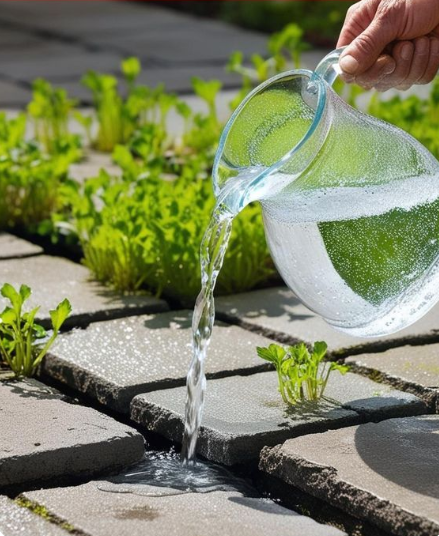
For paved areas like the pathway in the image, you can pour vinegar directly into the cracks between stones or bricks where weeds emerge. This creates an inhospitable environment that prevents regrowth for several weeks or even months.
Enhancing the Formula for Stubborn Weeds
For particularly persistent weeds, you can boost your vinegar solution by adding a tablespoon of dish soap per gallon of vinegar. The soap acts as a surfactant, helping the vinegar stick to waxy leaf surfaces and penetrate more deeply. Some gardeners also add a cup of salt to target root systems, though this should be used cautiously as salt can affect soil quality and prevent future plant growth. 💪
Another effective addition is lemon juice, which contains citric acid that works alongside the acetic acid in vinegar to create a double-action weed killer. This combination is especially useful for broadleaf weeds in lawns.
Long-Term Prevention Strategies
While vinegar eliminates existing weeds, preventing their return requires additional steps. After clearing an area, consider these natural barriers: spread a thick layer of mulch in garden beds to block sunlight from reaching weed seeds, use landscape fabric beneath gravel or stone pathways, or plant ground cover plants that crowd out potential weeds.
Regular maintenance makes a significant difference. Walking your property weekly and spot-treating new weed growth before it establishes deep roots keeps your garden manageable without major interventions. According to agricultural research, pulling weeds before they flower can reduce the following year’s weed population by up to 70%.
Safety Considerations and Best Practices
Though vinegar is natural, the concentrated versions used for weed control can irritate skin and eyes, so wear gloves and protective eyewear during application. Keep pets and children away from treated areas until the vinegar has dried completely. Be mindful that vinegar is non-selective—it will damage any plant it touches, so careful application is essential around flowers, vegetables, and grass you want to keep. 🧤
Avoid using vinegar near concrete, as the acid can etch or discolor sealed surfaces over time. Test a small area first if you’re treating weeds near decorative stonework or colored pavers.
The Environmental and Economic Benefits
Choosing natural weed control protects pollinators like bees and butterflies that are essential for garden productivity and ecosystem health. It keeps toxic runoff from entering storm drains and local waterways, preserving water quality for entire communities. The cost savings are substantial too—a gallon of horticultural vinegar costs a fraction of commercial herbicides and treats a much larger area.
This approach aligns with sustainable gardening practices that build healthy soil and support biodiversity rather than creating chemical-dependent landscapes. 🌍
Natural weed control through vinegar application offers an effective, affordable, and environmentally responsible alternative to synthetic herbicides. With consistent application and preventive strategies, you can achieve the weed-free pathways and garden beds you’ve always wanted while protecting your family and the planet.
Have you tried vinegar or other natural methods for weed control in your garden? What results did you experience?
