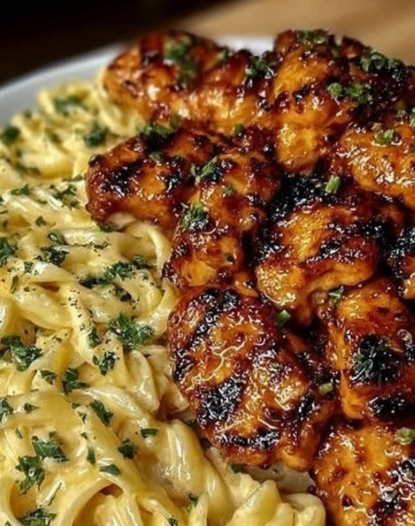
Ingredients
For the Lemon Garlic Butter Chicken:
- 4 boneless, skinless chicken breasts (about 1.5 pounds)
- Salt and freshly ground black pepper
- 1 teaspoon Italian seasoning
- 2 tablespoons olive oil
- 4 tablespoons butter, divided
- 5 cloves garlic, minced
- Zest of 1 lemon
- Juice of 2 lemons (about 1/3 cup)
- 1/2 cup chicken broth
- 2 tablespoons fresh parsley, chopped
- Lemon slices for serving
For the Creamy Parmesan Pasta:
- 12 ounces fettuccine
- 3 tablespoons butter
- 4 cloves garlic, minced
- 1 1/2 cups heavy cream
- 1 1/4 cups freshly grated Parmesan cheese
- 1/2 teaspoon garlic powder
- Salt and pepper to taste
- Pinch of nutmeg (optional but recommended)
- Fresh parsley and extra Parmesan for garnish
Preparing the Chicken
Start by bringing your chicken to room temperature for about 15 minutes before cooking. This helps it cook more evenly. Pat each piece completely dry with paper towels—moisture on the surface prevents proper browning.
Season both sides generously with salt, pepper, and Italian seasoning. Don’t be timid here. Underseasoned chicken is bland chicken, and you want every bite to be flavorful.
Heat the olive oil in a large skillet over medium-high heat until it shimmers. You want the pan hot enough that the chicken sizzles immediately when it hits the surface. Carefully place the chicken breasts in the pan and resist the urge to move them around. Let them cook undisturbed for 6-7 minutes.
You’ll know they’re ready to flip when they release easily from the pan and have developed a golden-brown crust. Flip and cook another 5-6 minutes until the internal temperature reaches 165°F. The exact time depends on thickness, so use a meat thermometer rather than guessing.
Transfer the cooked chicken to a plate and tent loosely with foil to keep warm while you make the sauce.
Creating the Lemon Garlic Butter Sauce
Here’s where the magic happens. Lower the heat to medium and add 2 tablespoons of butter to the same skillet you cooked the chicken in. All those browned bits stuck to the pan are concentrated flavor—you want to incorporate them into your sauce.
Once the butter melts, add the minced garlic and cook for about 1 minute, stirring frequently. You want it fragrant and just starting to turn golden, not brown. Burned garlic is bitter, so watch it carefully.
Add the lemon zest and stir for about 30 seconds to release its aromatic oils. Then pour in the lemon juice and chicken broth. Use a wooden spoon to scrape up all those delicious browned bits from the pan bottom—this process is called deglazing, and it’s flavor gold.
Let the sauce simmer for 3-4 minutes until it reduces by about one-third. The flavors will concentrate and the liquid will thicken slightly. Taste and adjust seasoning with salt and pepper.
Remove from heat and stir in the remaining 2 tablespoons of butter. This final addition gives the sauce that glossy, restaurant-quality finish. Stir in the fresh parsley.
Return the chicken to the skillet, spooning sauce over each piece. Let it sit in the sauce while you finish the pasta, allowing the flavors to meld.
Making the Creamy Parmesan Pasta
While the chicken cooks, bring a large pot of heavily salted water to boil. The water should taste like seawater—this is your only chance to season the pasta itself. Cook the fettuccine according to package directions until al dente, usually 10-12 minutes.
Before draining, scoop out at least 1 cup of pasta cooking water and set it aside. This starchy water is your secret weapon for adjusting sauce consistency later.
In a large, deep skillet over medium heat, melt the butter. Add the minced garlic and cook for 1 minute until fragrant. Pour in the heavy cream and bring it to a gentle simmer—don’t let it boil hard or it might break.
Reduce the heat to low and gradually add the grated Parmesan, stirring constantly. Add it in three or four additions, letting each batch melt completely before adding more. If you dump it all in at once, you’ll get clumps instead of a smooth sauce.
Stir in the garlic powder and a small pinch of nutmeg. The nutmeg is subtle but adds incredible depth to cream sauces—most people can’t identify it, but they definitely notice something special about the flavor.
Add the drained pasta to the sauce and toss to coat every strand. If the sauce seems too thick, add reserved pasta water a tablespoon at a time until you reach the perfect consistency. The sauce should coat the pasta beautifully without pooling at the bottom of the bowl.
Season with salt and pepper to taste. Remember that Parmesan is salty, so taste before adding more salt.
Bringing It All Together
Plating matters, even for weeknight dinners. The visual appeal of your food affects how much you enjoy eating it.
Twirl a portion of pasta onto the center of each plate using tongs or a large fork. Place a chicken breast on top or slightly beside the pasta. Spoon extra lemon garlic butter sauce over the chicken, letting it mingle with the pasta below.
Garnish with fresh parsley, thin lemon slices, and a sprinkle of extra Parmesan. A crack of fresh black pepper adds visual interest and a little kick.
The contrast of colors—golden chicken, creamy white pasta, bright green parsley, and sunny yellow lemon—creates an appealing presentation that looks as impressive as it tastes.
Pro Tips for Restaurant-Quality Results
These small details separate good home cooking from restaurant-level excellence.
Don’t Skip the Pasta Water
That starchy cooking water helps the sauce cling to the pasta and creates a silky consistency that plain water or cream alone can’t achieve. The starch acts as a natural emulsifier, binding the fat and liquid together.
Temperature Control Is Everything
Cook the chicken over medium-high heat for proper browning, but make the cream sauce over medium to medium-low heat. High heat causes cream to separate and Parmesan to clump. Patience produces better results.
Fresh Herbs at the End
Add fresh parsley at the very end of cooking to preserve its bright color and fresh flavor. Cooking herbs too long dulls their vibrancy.
Let the Chicken Rest
Giving cooked chicken a few minutes to rest before serving allows the juices to redistribute throughout the meat. Cut into it immediately and those juices run out onto the plate instead of staying in the chicken where they belong.
Wine Pairing Suggestions
If you’re making this for a special occasion, the right wine elevates the entire experience.
A crisp, unoaked Chardonnay complements the buttery richness without competing with the lemon brightness. Look for one with good acidity to cut through the cream.
Pinot Grigio offers a lighter alternative with citrus notes that echo the lemon in the dish. It’s refreshing and won’t overwhelm the delicate flavors.
Sauvignon Blanc brings herbaceous notes and zippy acidity that work beautifully with both the garlic and the lemon.
For those who prefer red wine, a light-bodied Pinot Noir with low tannins can work surprisingly well. Its subtle fruit notes and silky texture complement the richness without clashing.
Variations to Keep Things Interesting
Once you’ve mastered the basic recipe, these variations add new dimensions.
Sun-Dried Tomato Addition
Stir chopped sun-dried tomatoes into the lemon garlic sauce for bursts of concentrated tomato flavor. Their slight sweetness balances the lemon’s tartness beautifully.
Spinach or Asparagus
Add fresh spinach to the pasta during the last minute of cooking, letting it wilt into the sauce. For asparagus, sauté thin pieces in the chicken pan before making the sauce, then add them back at the end.
Capers for Extra Brightness
A tablespoon of capers added to the lemon garlic sauce provides briny, tangy pops of flavor that intensify the Mediterranean feel of the dish.
Mushroom Enhancement
Sauté sliced mushrooms in the chicken pan after removing the chicken, then make the sauce. The umami from mushrooms adds earthy depth.
Spicy Kick
Add red pepper flakes to the garlic when making either the chicken sauce or the pasta. Start with 1/4 teaspoon and adjust to your heat preference.
Make-Ahead and Storage
While this dish is best fresh, you can prep components ahead to streamline dinner.
Season the chicken up to 4 hours ahead and keep it refrigerated. Mince the garlic and store it in a small container. Grate the Parmesan and measure out your other ingredients.
Cook the pasta fresh when serving—it only takes 10-12 minutes and tastes infinitely better than reheated pasta.
Leftovers can be stored separately in airtight containers for up to 3 days. Reheat the chicken gently in a skillet with a splash of broth. The pasta is trickier—add a few tablespoons of cream or milk when reheating to refresh the sauce, which will have thickened considerably in the fridge.
Common Mistakes to Avoid
Even straightforward recipes have pitfalls. Here’s what to watch out for.
Overcooking the Chicken
Dry chicken ruins this dish. Pull it off the heat the moment it reaches 165°F. Carryover cooking will raise the temperature another 5 degrees as it rests.
Adding Cheese to Boiling Cream
High heat causes Parmesan to seize into clumps instead of melting smoothly. Always reduce to low heat before adding cheese, and add it gradually.
Using Pre-Shredded Cheese
Those anti-caking agents prevent proper melting. Your sauce will be grainy instead of silky. Grate fresh cheese—it’s worth the two minutes of effort.
Not Deglazing Properly
Those browned bits stuck to the pan after cooking chicken are pure concentrated flavor. Scrape them up when you add the liquid—they make the sauce incredible.
Serving Size and Scaling
This recipe serves 4 generously. To scale up for a larger crowd, you’ll need a bigger skillet or work in batches. Don’t crowd the pan when cooking chicken or it will steam instead of brown.
For a smaller household, the recipe halves easily. You can also make the full amount and enjoy leftovers—the chicken reheats better than the pasta, so consider making less pasta if you’re cooking for one or two.
Why This Recipe Deserves a Regular Spot in Your Rotation
Lemon garlic butter chicken with creamy Parmesan pasta hits that rare sweet spot—impressive enough for company but easy enough for Tuesday night. It satisfies cravings for comfort food while feeling refined and special.
The recipe teaches fundamental cooking techniques that apply to countless other dishes: proper pan-searing, sauce-making, and working with cream and cheese. Master this meal and you’ve leveled up your overall cooking skills.
It’s also remarkably versatile. The basic framework accommodates different proteins, pasta shapes, vegetables, and flavor additions based on what you have available or what sounds good.
Most importantly, it’s genuinely delicious. Every component brings something essential—the bright, garlicky chicken, the rich, cheesy pasta, the harmonious way they come together on the plate. This isn’t food that just fills you up; it’s food that makes you happy while you’re eating it.
The recipe delivers restaurant-quality results without restaurant-level effort or expense. Once you make it, you’ll understand why it’s worth keeping in your regular dinner rotation. Some recipes you make once out of curiosity. This one becomes a reliable favorite you’ll return to again and again, impressing yourself and everyone you feed.
