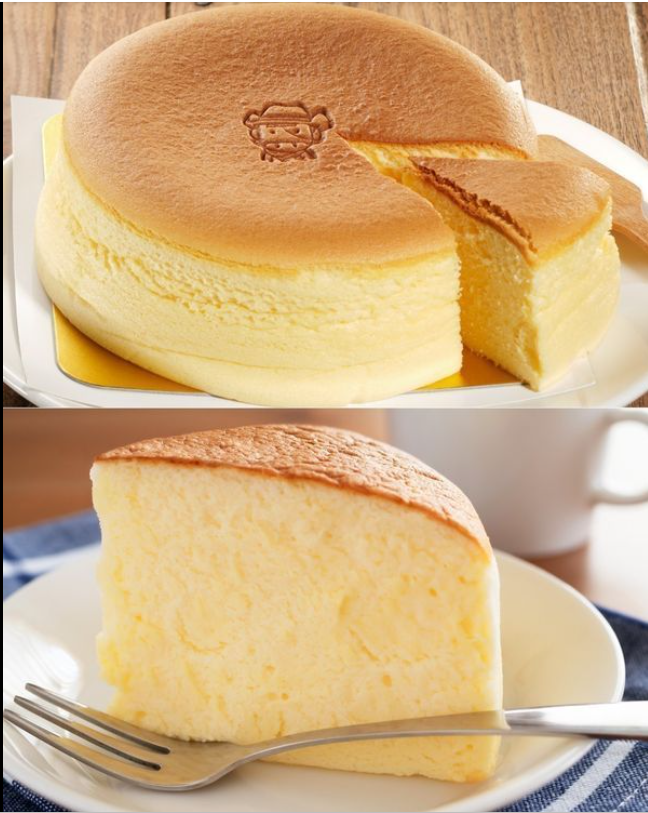
Recipe Time Table
| Category | Duration |
| Total Time | 2 Hours 20 Minutes |
| Prep Time | 30 Minutes |
| Cook Time | 70 Minutes |
| Cool Time | 40 Minutes |
Preparation Steps for Japanese Cotton Cheesecake
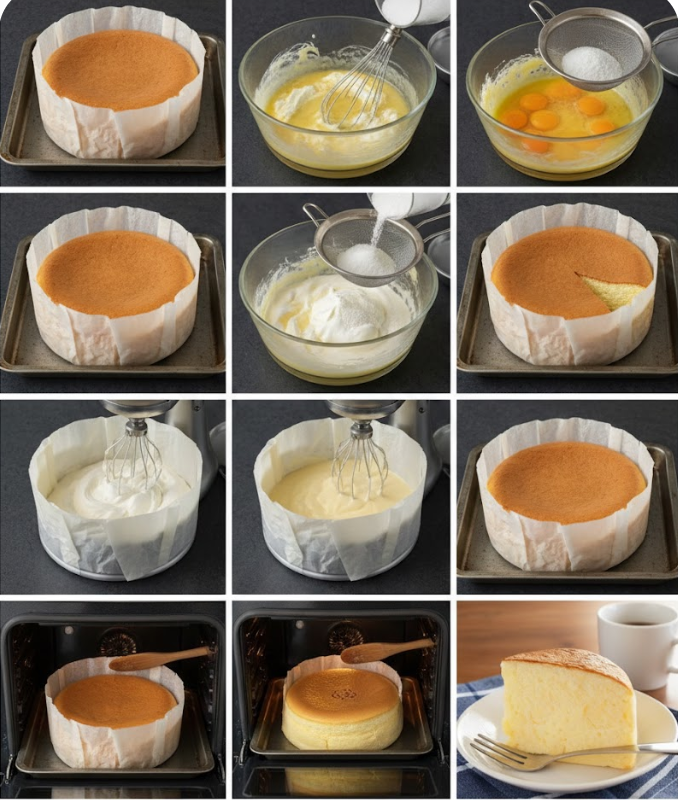
1. Prepare the Pan and Oven: Preheat your oven to 160°C. Grease an 8-inch round cake pan and line the bottom and sides with parchment paper, ensuring the paper rises 2 inches above the rim. Wrap the outside of the pan in double layers of foil to prevent water seepage.
2. Melt the Base: In a double boiler over simmering water, combine the cream cheese, butter, and milk. Whisk until the mixture is completely smooth and lump-free. Remove from heat and let it cool slightly.
3. Incorporate Dry Ingredients: Whisk the egg yolks into the cream cheese mixture one by one. Add the lemon juice and vanilla extract. Gradually sift in the cake flour and cornstarch, whisking gently until the batter is silky. Pass the mixture through a fine-mesh sieve for an extra-smooth Japanese Cotton Cheesecake base.
4. Whip the Meringue: In a separate clean bowl, beat the egg whites with cream of tartar until foamy. Gradually add the sugar while continuing to beat until you reach “soft-to-medium” peaks. The tips should curl over slightly when the whisk is lifted.
5. The Folding Process: Gently fold one-third of the meringue into the cheese batter to lighten it. Add the remaining meringue in two batches, using a spatula to fold with a “cut and turn” motion. Be careful not to deflate the air bubbles.
6. The Water Bath Bake: Pour the batter into the prepared pan. Place the pan in a larger roasting tray and fill the tray with hot water until it reaches halfway up the side of the cake pan. Bake at 160°C for 20 minutes, then reduce the heat to 140°C for another 50 minutes.
7. Gradual Cooling: Once baked, turn off the oven and prop the door open slightly with a wooden spoon. Leave the cake inside for 30 minutes. This prevents the cake from collapsing due to sudden temperature changes ☁️.
Why Temperature Control is Critical
Success with a Japanese Cotton Cheesecake depends heavily on how you manage heat. Baking at a high temperature too quickly causes the top to crack, while cooling it too fast causes the structure to shrink. The water bath (bain-marie) acts as a buffer, ensuring the eggs cook gently and the cake remains moist. Always use room temperature eggs, as they incorporate more air and create a more stable meringue than cold ones.
Nutrition Facts (Per Serving)
- Calories: 280 kcal
- Total Fat: 18g
- Carbohydrates: 22g
- Protein: 7g
- Sugar: 16g
Serving and Storage Tips
For the best experience, serve this cake slightly chilled or at room temperature. It pairs beautifully with a dusting of powdered sugar or a side of fresh berries. To store, place the Japanese Cotton Cheesecake in an airtight container and keep it in the refrigerator for up to 3 days. Do not freeze this cake, as the delicate cellular structure will break down, losing its characteristic fluffiness.
Frequently Asked Questions
Why did my cheesecake crack on top?
Cracks usually happen if the oven is too hot or the meringue was over-whipped to “stiff peaks.” Aim for soft, flexible peaks and use an oven thermometer to verify the heat is exactly 160°C.
Why is my cake dense at the bottom?
This “rubber layer” occurs if the yolk mixture and meringue weren’t folded together thoroughly or if the batter sat too long before going into the oven.
Can I use All-Purpose flour?
Cake flour is preferred for its lower protein content, which ensures a tender, soft crumb. If you must use All-Purpose, replace 2 tablespoons of it with cornstarch per cup.
Creating a Japanese Cotton Cheesecake is a true labor of love that turns simple pantry staples into a sophisticated culinary work of art 🌟. By following these precise steps and respecting the cooling process, you can achieve a professional-grade dessert right in your home kitchen.
This airy delight is the perfect centerpiece for afternoon tea or a light post-dinner treat. If you try this recipe, how did your first “jiggle” turn out? Share your results and let us know if you added any unique toppings!
Would you like me to provide a variation for a Matcha-infused version of this cheesecake?
