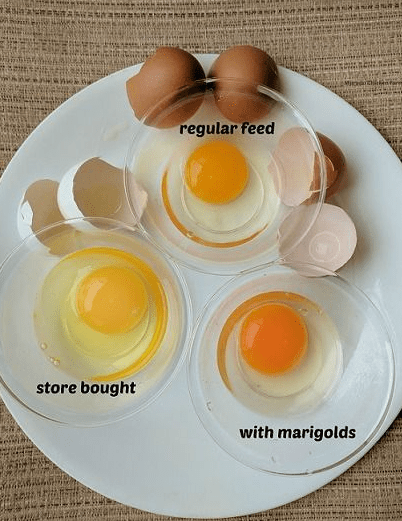
The Yolk Tells the Story
When you crack open an egg from a healthy chicken, the yolk should stand tall and proud, not flat and runny. The color is particularly revealing:
Deep orange to golden yellow yolks indicate a hen with access to quality feed, fresh greens, and insects. This rich coloring comes from carotenoids in their natural diet. Pale, anemic-looking yolks suggest limited nutrition and restricted living conditions.
The yolk should be firm and dome-shaped, holding its structure rather than breaking easily. This firmness indicates freshness and proper nutrition in the hen’s diet.
The White (Albumen) Quality
High-quality eggs from healthy chickens feature thick, cloudy egg whites that stay close to the yolk rather than spreading thin across the plate. You’ll notice two distinct layers: a thick inner white surrounding the yolk and a thinner outer white.
The cloudiness is actually a good sign—it indicates freshness and the presence of carbon dioxide, which dissipates as eggs age. Crystal-clear whites might look appealing but often signal older eggs.
The Chalaza: A Positive Indicator
Those twisted, rope-like strands you see anchoring the yolk? They’re called chalazae, and prominent ones are excellent news. Thick, visible chalazae indicate freshness and come from healthy, well-nourished hens. Many people mistakenly remove them, but they’re completely edible and harmless.
The Smell Test 👃
Fresh eggs from healthy chickens have virtually no smell when raw. After cracking, take a subtle sniff—you shouldn’t detect any sulfurous or unpleasant odors. Any off-putting smell is an immediate red flag, regardless of the expiration date on the carton.
Specific Markers of Premium Quality
Air Cell Size
As eggs age, the air cell inside grows larger. Fresh eggs from healthy chickens have small air cells. While you can’t see this without candling equipment, the float test works well: fresh eggs sink in water, while older eggs float due to the enlarged air cell.
Membrane Strength
When peeling hard-boiled eggs, notice the membrane—the thin skin between the shell and the white. Eggs from healthy chickens have strong, intact membranes that don’t tear easily. This relates directly to the hen’s protein intake and overall health.
Source Matters: What to Look For
Free-Range and Pastured Labels
While labels can be misleading, genuinely pastured eggs typically show all the quality markers mentioned above. Look for producers who provide transparency about their practices. The best eggs come from chickens with outdoor access, diverse diets, and low-stress environments.
Local and Small-Scale Farms
Building relationships with local egg producers lets you ask questions about chicken health, feed quality, and living conditions. Many small farms welcome visits, allowing you to see firsthand how the chickens live.
The Bottom Line
Identifying eggs from healthy chickens becomes intuitive with practice. Focus on strong shells, vibrant yolks, thick whites, and minimal odor. These characteristics aren’t just aesthetic—they represent nutritional superiority and ethical farming practices.
Remember, the most beautiful eggs often come from the happiest chickens. By choosing quality eggs, you’re supporting better animal welfare while nourishing yourself with superior nutrition. Your taste buds, body, and conscience will thank you for making informed choices at the egg aisle. ✨
