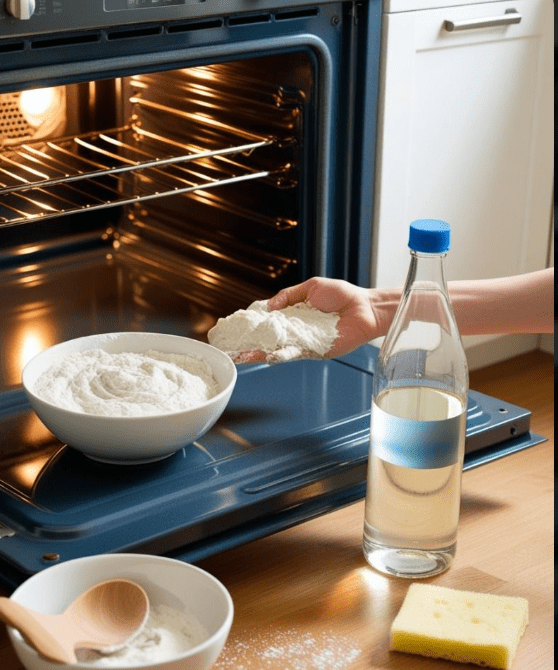
Let’s be honest—cleaning the oven ranks somewhere between doing taxes and assembling furniture on the list of household tasks we’d rather avoid. But what if I told you that learning how to clean oven with vinegar and baking soda could transform this dreaded chore into something surprisingly manageable? No harsh chemicals, no eye-watering fumes, just three simple pantry staples that pack a serious cleaning punch.
After years of testing countless oven-cleaning methods, I’ve discovered that this natural approach not only works beautifully but also saves money and protects your health. The secret lies in understanding the science behind these everyday ingredients and applying them correctly.
Table of Contents
Why Vinegar and Baking Soda Work So Well Together
Before we dive into the cleaning process, it’s worth understanding why this combination creates such an effective cleaning powerhouse. Baking soda, chemically known as sodium bicarbonate, is mildly alkaline. This property makes it exceptional at breaking down grease and grime that accumulate inside ovens.
Vinegar, on the other hand, is acidic. When these two substances meet, they create a fizzing chemical reaction that helps lift stubborn residue from surfaces. But here’s the real magic—they don’t just work together. They work in stages, each doing its own heavy lifting at different points in the cleaning process.
Salt enters the equation as a gentle abrasive that adds scrubbing power without scratching surfaces. Think of it as nature’s scouring pad, perfect for those really stubborn, baked-on spots.
What You’ll Need to Get Started
Gathering your supplies beforehand makes the entire process smoother. Here’s your complete shopping list:
- Baking soda (about half a cup to one cup, depending on oven size)
- White distilled vinegar (approximately two cups)
- Table salt or coarse sea salt (quarter cup)
- Water
- Spray bottle
- Rubber gloves
- Cleaning cloths or old rags
- Plastic or silicone spatula
- Small bowl for mixing
- Optional: dish soap for extra grease-cutting power
The beauty of this method is that most people already have these items at home. No special trips to the store for expensive, chemical-laden cleaners required.
Preparing Your Oven for Deep Cleaning
Safety and preparation set the foundation for successful oven cleaning. Start by removing everything from inside your oven—racks, thermometers, pizza stones, and any other items you might store there. Your oven should be completely empty before you begin.
Make sure your oven is completely cool. Never attempt to clean a warm or hot oven, as this can cause burns and make the cleaning paste less effective. If you’ve recently used your oven, wait at least four hours before starting the cleaning process.
Remove the oven racks and set them aside—we’ll tackle those separately. Sweep or vacuum out any loose debris, crumbs, or ash from the oven floor. This preliminary step prevents you from creating muddy paste later when you add your cleaning solution.
Open your kitchen windows or turn on ventilation fans. While vinegar and baking soda are far less harsh than commercial cleaners, proper ventilation still makes the process more comfortable.
The Step-by-Step Cleaning Process
Creating Your Cleaning Paste
In your small bowl, mix half a cup of baking soda with three tablespoons of water. You’re aiming for a spreadable paste consistency—thick enough to stick to vertical surfaces but not so dry that it crumbles. Adjust the water amount as needed.
Once you’ve achieved the right texture, add two tablespoons of salt to the mixture. The salt provides that extra abrasive quality that tackles particularly stubborn spots. Mix thoroughly until you have a uniform paste.
For ovens with heavy grease buildup, consider adding a few drops of dish soap to your paste. This optional addition boosts the grease-cutting power significantly.
Applying the Paste
Using your hands (gloved, of course), spread the baking soda paste throughout the inside of your oven. Pay special attention to areas with visible grease or grime buildup. Coat the bottom, sides, and top of the oven cavity, avoiding the heating elements if you have an electric oven.
The paste will likely turn brown as it makes contact with the grime—this is completely normal and actually a good sign that it’s working. Don’t worry about applying it perfectly evenly. Just make sure all dirty areas receive adequate coverage.
For those hard-to-reach corners and tight spaces, use your spatula to spread the paste more precisely. Really work it into any particularly grimy spots.
The Waiting Game
Here’s where patience becomes your best friend. Let the baking soda paste sit for at least four hours, though overnight works even better. During this time, the paste is breaking down grease and loosening baked-on food particles.
For extremely dirty ovens that haven’t been cleaned in years, you might want to let the paste work its magic for a full 12 hours. The longer dwell time allows for deeper penetration into stubborn grime.
While you wait, resist the temptation to peek or touch the paste. Just let the chemistry do its job.
Bringing in the Vinegar
After your waiting period, fill your spray bottle with white vinegar. Now comes the satisfying part—spray the vinegar directly onto the baking soda paste. You’ll see it foam and fizz immediately as the acid and base react.
Spray generously, making sure to cover all areas where you applied paste. The foaming action helps lift the grime away from the oven surfaces. Let this reaction continue for about 15 minutes.
The vinegar also helps break down any remaining paste, making it easier to wipe away. For extra-stubborn spots, spray additional vinegar and let it sit a few more minutes.
Wiping Everything Clean
Grab your damp cloth and start wiping out the oven interior. You’ll find that most of the grime comes away easily with the paste and vinegar solution. For stubborn spots that remain, sprinkle a bit of additional salt directly on the area and scrub gently with your cloth.
Keep a bowl of clean water nearby for rinsing your cloths frequently. You’ll go through several cloths during this process, which is perfectly normal. The goal is to remove all residue, leaving no paste or grime behind.
Pay particular attention to corners and crevices where paste tends to accumulate. Use your spatula wrapped in a cloth to reach these tricky spots.
Continue wiping until you’ve removed all traces of the cleaning mixture and the surfaces feel smooth to the touch. Give everything a final wipe with a clean, damp cloth to ensure no residue remains.
Tackling Those Oven Racks
Your oven racks deserve the same thorough cleaning treatment. Place them in your bathtub or a large basin filled with hot water. Add half a cup of baking soda and a quarter cup of salt to the water, then let the racks soak for at least two hours.
For racks with significant buildup, create a paste of baking soda, salt, and water, and apply it directly to the grimiest areas before soaking. The combination of soaking and paste application works wonders.
After soaking, scrub the racks with a brush or scouring pad. The grime should come off much more easily now. For any remaining stubborn spots, spray with vinegar and scrub again.
Rinse the racks thoroughly with clean water, dry them completely, and return them to your sparkling clean oven.
Dealing with the Oven Door Glass
Oven door glass requires a slightly different approach. Make a paste using baking soda, salt, and just enough water to create a spreadable consistency. Apply this paste to the glass, focusing on any grease splatters or cooked-on residue.
Let the paste sit for 30 minutes, then spray with vinegar. Use a non-abrasive sponge or cloth to scrub the glass in circular motions. The combination of the paste and vinegar should cut through even stubborn, baked-on grime.
For glass with multiple layers or spots between the panes, you might need to disassemble the door according to your oven manufacturer’s instructions. However, for most routine cleaning, the exterior glass treatment proves sufficient.
Wipe clean with a damp cloth, then polish with a dry microfiber cloth for a streak-free shine.
Pro Tips for Maximum Effectiveness
The timing of your cleaning matters more than you might think. Clean your oven when you don’t need it for at least 12 hours. This gives you plenty of time for the paste to work and for everything to dry completely before your next cooking session.
Temperature plays a role too. Room temperature or slightly warm ovens (no warmer than you can comfortably touch) allow the baking soda paste to work most effectively. Extremely cold ovens can make the paste less reactive.
For self-cleaning ovens, check your manual before using this method. While generally safe, some manufacturers have specific recommendations about what you can and cannot use on their surfaces.
Create a stronger solution for tough jobs by reducing the water in your paste slightly. A thicker paste adheres better to vertical surfaces and provides more concentrated cleaning power.
Don’t forget about the broiler compartment if your oven has a separate one. It collects grease and grime just like the main oven cavity and benefits from the same cleaning treatment.
Maintaining Your Freshly Cleaned Oven
Once you’ve invested the effort in deep-cleaning your oven, maintaining that cleanliness becomes much easier. Wipe up spills immediately after the oven cools down—fresh spills come up far more easily than baked-on ones.
Place a baking sheet or oven liner on the bottom rack when cooking foods prone to dripping or splattering. This catches messes before they reach the oven floor.
Give your oven a quick maintenance clean every month using a diluted vinegar spray. Simply spray, let sit for a few minutes, then wipe clean. This prevents heavy buildup from forming.
Keep a small container of your baking soda and salt paste pre-mixed and ready to tackle small spots as they appear. Quick spot-treatments prevent major cleaning sessions later.
Common Mistakes to Avoid
Never spray vinegar directly into a hot oven. The sudden temperature change can damage enamel coatings and create dangerous steam.
Don’t skip the waiting time. Rushing the process means the baking soda doesn’t have enough time to break down grease, leaving you with more scrubbing work later.
Avoid using this method on continuous-cleaning or self-cleaning oven surfaces without checking your manual first. Some special coatings can be damaged by even natural cleaners.
Don’t forget to protect your hands. While these ingredients are natural, prolonged exposure to baking soda can dry out your skin, and vinegar can irritate cuts or sensitive skin.
Never apply baking soda paste directly to heating elements. If paste does get on elements, wipe it off immediately with a damp cloth.
When to Call for Professional Help
Sometimes, despite our best efforts, an oven needs professional attention. If you notice damaged gaskets, broken heating elements, or persistent smoke even after thorough cleaning, it’s time to contact a professional.
Ovens with significant rust or deteriorating enamel coatings might need more than a deep clean. In these cases, the underlying issues require expert assessment.
If you’ve cleaned your oven thoroughly but still smell gas or notice unusual odors during operation, stop using the oven immediately and call a qualified technician.
The Environmental and Health Benefits
Choosing to clean your oven with vinegar and baking soda rather than commercial cleaners offers significant advantages beyond just getting your oven clean.
Commercial oven cleaners often contain sodium hydroxide (lye) and other harsh chemicals that can irritate lungs, eyes, and skin. These chemicals linger in your oven even after wiping, potentially releasing fumes during your next cooking session.
The natural method eliminates exposure to these toxic substances, making it safer for everyone in your household—especially important if you have children, pets, or family members with respiratory sensitivities.
From an environmental perspective, you’re avoiding chemicals that enter our water systems through rinsing and disposal. Baking soda and vinegar break down naturally without harming ecosystems.
The cost savings add up too. A large box of baking soda costs a fraction of commercial oven cleaner and can handle multiple cleaning sessions.
Embracing the Natural Clean
Learning how to clean oven with vinegar and baking soda empowers you to maintain your kitchen using simple, safe, and effective methods. This approach proves that powerful cleaning doesn’t require harsh chemicals or expensive products.
The next time you open your oven door and cringe at the accumulated grime, remember that transformation is just a few pantry staples away. With patience, the right technique, and these three humble ingredients, you can achieve professional-level results from the comfort of your own kitchen.
Your sparkling clean oven awaits—no toxic fumes, no harsh chemicals, just the satisfaction of a naturally clean cooking space ready for your next culinary adventure.
