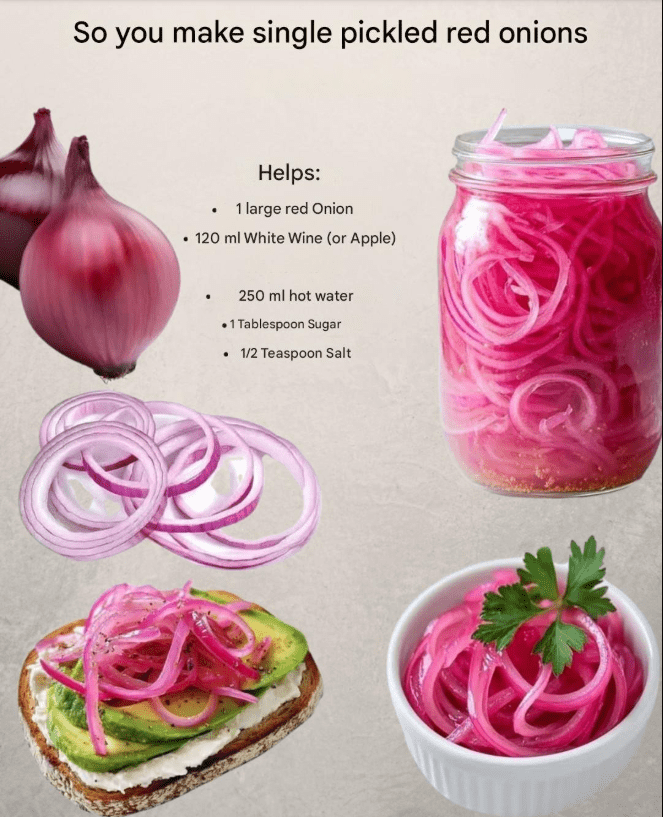
Essential Ingredients for Perfect Pickled Red Onions
Red Onions: Choosing the Best
Look for firm, heavy onions without soft spots or sprouting. Medium-sized onions work best—they’re easier to slice uniformly than very large ones. The onions should have tight, papery skins without excessive moisture underneath, which indicates freshness.
One medium red onion yields about two cups of sliced onions, enough to fill a pint jar. Depending on how often you use pickled onions, you might want to double or triple the recipe. They keep so well that making a larger batch is often more practical than making small amounts frequently.
Vinegar: The Foundation of Your Brine
The type of vinegar dramatically affects the final flavor. White vinegar creates a clean, sharp pickle with no competing flavors—think traditional diner pickles. Apple cider vinegar adds fruity depth and a slightly mellower acidity that many people prefer for onions. Red wine vinegar contributes subtle complexity and a beautiful color enhancement.
Rice vinegar works wonderfully if you want something gentler, though you might want to reduce the sugar slightly since rice vinegar has natural sweetness. Avoid balsamic vinegar, which is too heavy and sweet for this application, and distilled white vinegar, which can taste harsh despite being perfectly functional.
Whatever vinegar you choose should have at least 5% acidity. This level ensures food safety and proper pickling. Most standard vinegars meet this requirement, but check the label to be certain.
Sugar: Balancing the Acid
Granulated white sugar is standard, creating a clean sweetness that balances the vinegar without adding flavor complexity. However, you can experiment with honey for floral notes, maple syrup for depth, or light brown sugar for subtle molasses undertones.
The amount of sugar is flexible based on personal preference. Some people like their pickled onions quite tart with minimal sweetness, while others prefer a more pronounced sweet-and-sour balance. Start with the recipe as written, then adjust in future batches.
Salt: More Than Seasoning
Salt does more than add flavor—it helps pull moisture from the onions and preserve them. Regular table salt works fine, though kosher salt or sea salt provides cleaner flavor without the anti-caking agents found in iodized salt.
Different salts measure differently by volume due to crystal size. If you’re using kosher salt, you may need to increase the amount slightly. When precision matters, weighing salt is more accurate than measuring by volume.
Water: The Often-Overlooked Component
Use filtered water if your tap water has strong mineral flavors or chemical tastes. These can interfere with the delicate balance of your pickling brine. If your tap water tastes good for drinking, it’s fine for pickling.
The Basic Recipe for Homemade Pickled Red Onions
Ingredients
- 1 large red onion, thinly sliced
- 1 cup white vinegar or apple cider vinegar
- ½ cup water
- 2 tablespoons granulated sugar
- 1 tablespoon kosher salt
- ½ teaspoon black peppercorns (optional)
- 1 bay leaf (optional)
Step-by-Step Instructions
Start by slicing your red onion as thinly as possible. A mandoline makes this effortless and ensures uniform thickness, but a sharp knife works perfectly well with a bit of care. Aim for slices about ⅛-inch thick—thin enough to pickle quickly but thick enough to maintain some crunch.
Place the sliced onions in a clean pint jar or heat-safe bowl. If you’re using any optional spices like peppercorns or bay leaf, tuck them in with the onions now.
In a small saucepan, combine the vinegar, water, sugar, and salt. Bring the mixture to a simmer over medium heat, stirring occasionally to dissolve the sugar and salt completely. You don’t need a rolling boil—just hot enough that the sugar and salt disappear into the liquid.
Pour the hot brine over the onions in the jar. Use a spoon to press the onions down gently, ensuring they’re fully submerged. The onions will likely float at first, which is normal. As they soften and absorb liquid, they’ll settle.
Let the jar cool to room temperature uncovered. This takes about 30 to 45 minutes. Once cool, cover the jar with a lid and refrigerate. The onions are technically ready after one hour, but they’ll taste even better after sitting overnight as the flavors fully develop.
Slicing Techniques That Make a Difference
Thickness Matters
Thinner slices pickle faster and have a more delicate texture. They work beautifully as a garnish or mixed into dishes where you want the onion to integrate rather than dominate. Very thin slices also create those lovely, translucent ribbons that look so appealing.
Thicker slices maintain more crunch and onion flavor. They’re better when you want the pickled onions to be a prominent component rather than a subtle accent. Thicker slices also hold up better on sandwiches without becoming limp.
For most applications, aim for the thickness of a quarter. This provides good balance between quick pickling and satisfying texture.
Cutting Against or With the Grain
Slicing perpendicular to the root end (against the grain) creates shorter pieces that separate into individual rings. This cut is traditional and works well for most uses. The rings are easy to eat and distribute evenly over food.
Slicing parallel to the root end (with the grain) produces longer, more structured pieces that hold together better. This cut is excellent for sandwiches where you want the onion to stay in place rather than sliding out with every bite.
Achieving Uniform Slices
Uniform thickness ensures even pickling. Thicker pieces will still be quite onion-forward while thinner sections become very soft and tangy. When everything is the same thickness, every bite has consistent flavor and texture.
A mandoline is the easiest way to achieve uniformity, though it requires careful handling to avoid injury. Always use the hand guard, and consider investing in a cut-resistant glove for extra safety.
If cutting by hand, take your time. A sharp knife is essential—dull knives slip and create uneven slices. Cut the onion in half through the root, peel it, then place the flat side down for stability while slicing.
Creative Flavor Variations to Try
Mexican-Style with Lime and Oregano
Add the juice of one lime to your brine along with a teaspoon of dried oregano and a pinch of cumin. This variation is perfect for tacos, burritos, and anything with Mexican or Southwestern flavors. The lime adds brightness that complements cilantro and chili peppers beautifully.
Asian-Inspired with Ginger and Soy
Add thin slices of fresh ginger to your jar and replace a quarter cup of the vinegar with rice vinegar. A teaspoon of soy sauce adds umami depth. This version works wonderfully on banh mi sandwiches, rice bowls, or alongside grilled fish.
Mediterranean with Herbs and Garlic
Tuck in fresh thyme sprigs, a few smashed garlic cloves, and a strip of lemon zest. Use red wine vinegar for this variation. These pickled onions are perfect for Greek salads, grain bowls, or served alongside grilled lamb.
Spicy Version with Jalapeño
Add sliced jalapeño to the jar along with a pinch of red pepper flakes. The heat mellows in the brine but still provides a pleasant kick. This variation is excellent on burgers, hot dogs, or anywhere you want pickled onions with attitude.
Sweet and Tangy with Honey and Mustard Seeds
Replace the sugar with honey and add a teaspoon of whole mustard seeds. This creates a more complex sweet-sour balance with pleasant pops of mustard flavor. These work beautifully on cheese plates or with rich meats like pork belly.
Storage Guidelines and Shelf Life
Proper Storage Techniques
Always store pickled onions in a clean glass jar with a tight-fitting lid. Plastic containers can absorb odors and aren’t ideal for acidic foods. Make sure the onions remain submerged in the brine—exposure to air can lead to faster spoilage.
Use clean utensils every time you remove onions from the jar. Introducing bacteria from used forks or unwashed hands can contaminate the jar and shorten shelf life.
Keep the jar in the refrigerator at all times after the initial cooling period. These are refrigerator pickles, not shelf-stable canned goods. The cool temperature slows down any microbial growth and keeps the onions crisp.
How Long They Last
Properly stored homemade pickled red onions keep for three to four weeks in the refrigerator. Some sources claim they last up to two months, and they probably do remain safe that long, but the quality starts declining after a month. The onions become softer and lose their vibrant color.
For best flavor and texture, try to use them within two weeks. This is easy since they’re so versatile you’ll find yourself reaching for them constantly.
If you notice any off smells, mold, or cloudiness beyond the initial cloudiness from suspended onion particles, discard the jar. While rare with the high acidity, it’s better to be safe.
Can You Freeze Pickled Onions?
Technically yes, though it’s not recommended. Freezing changes the texture dramatically, making the onions mushy when thawed. The flavor survives freezing fine, but the appeal of pickled onions is partly about that satisfying crunch.
If you have more than you can use within a month, it’s better to make smaller batches more frequently than to freeze extras. The recipe is so quick that making fresh pickles is barely more work than thawing frozen ones.
Troubleshooting Common Pickling Problems
Onions Are Too Sharp or Strong
If your pickled onions taste too harshly of raw onion even after sitting overnight, a few factors might be at play. Very fresh onions from the farmers market are often stronger than storage onions from the grocery store. The solution is time—give them another day or two to mellow.
You can also try briefly blanching the sliced onions before pickling. Drop them in boiling water for 30 seconds, then drain and rinse with cold water. This removes some of the sulfur compounds while maintaining crunch.
Onions Turned Brown or Lost Color
Pickled onions naturally fade slightly over time, but dramatic color loss or browning indicates a problem. Using tap water with high iron content can cause darkening. Switch to filtered water for your next batch.
Overcooking the brine or leaving it too hot when you pour it over the onions can also affect color. Let the brine cool for a minute after removing it from heat, so it’s hot but not violently boiling.
Brine Tastes Too Sweet or Too Sour
The beauty of homemade pickles is adjustability. If your first batch is too sweet, reduce the sugar next time. Too sour? Add another tablespoon of sugar or reduce the vinegar slightly and increase the water.
Keep notes on your adjustments so you can replicate your perfect ratio. Everyone’s palate is different, and finding your ideal balance might take a batch or two.
Onions Are Too Soft
Very thin slices or extended storage time will soften pickled onions. If you prefer more crunch, cut thicker slices and make smaller batches that you’ll use within a week.
Using boiling brine also softens onions more than warm brine. Try letting your brine cool for a few minutes before pouring if you want firmer results.
Creative Ways to Use Pickled Red Onions
On Tacos and Mexican Food
This is perhaps the most popular use for pickled red onions. They’re a standard topping for cochinita pibil, carnitas, and fish tacos. The acidity cuts through rich meats while the crunch adds textural contrast. Add them to quesadillas, tostadas, or simply enjoy them alongside chips and guacamole.
Elevating Sandwiches and Burgers
Pickled onions take sandwiches from ordinary to memorable. They work on virtually everything—deli sandwiches, grilled cheese, BLTs, pulled pork, burgers, and veggie sandwiches. The tang brightens flavors while the onions add substance without the harsh bite of raw onions.
For burgers specifically, pickled red onions provide all the onion flavor you want without the raw onion breath you don’t. They also stay in place better than fresh onions, which tend to slide out.
Adding Zing to Salads
Chop pickled onions and toss them through grain salads, green salads, or bean salads. They act almost like a salad dressing component, adding acid and flavor throughout. They’re particularly good in hearty salads with roasted vegetables or proteins where their strong flavor won’t be overwhelmed.
Finishing Touch for Soups
A spoonful of pickled onions on top of soup adds brightness that lifts the entire bowl. Try them on black bean soup, tortilla soup, or creamy potato soup. The acid provides balance while the crunch gives textural interest that’s especially welcome in smooth, pureed soups.
Unexpected Applications
Add pickled onions to avocado toast, scrambled eggs, or grain bowls. Use them on pizza after it comes out of the oven—the heat will soften them slightly while maintaining their tang. Chop them finely and stir into potato salad, tuna salad, or egg salad for extra flavor and pretty pink flecks.
Mix them into salsas for added complexity, or serve them as part of a cheese board where their acidity cuts through rich cheeses. They’re excellent alongside smoked salmon or on top of deviled eggs.
The Economics of Making Your Own
Cost Comparison
A jar of pickled onions from the grocery store typically costs four to six dollars for about a cup. Making them yourself costs roughly one dollar for the same amount—just the price of an onion plus pennies worth of vinegar, sugar, and salt.
The savings multiply if you use pickled onions regularly. Making a batch every week or two saves significant money over the course of a year while providing fresher, better-tasting results.
Beyond Basic Savings
The real value extends beyond simple cost comparison. Homemade pickled onions contain exactly the ingredients you want and nothing you don’t—no preservatives, no artificial colors, no excessive sodium. You control the sweetness, acidity, and flavor additions.
You also avoid the waste of store-bought jars that sit in your fridge half-used until they expire. When you make your own, you can adjust batch sizes to match your consumption patterns.
Health Benefits and Nutritional Information
Nutritional Profile
Pickled red onions are low in calories—about 10-15 calories per quarter cup serving. They contain minimal fat and protein but provide small amounts of fiber and various vitamins and minerals, particularly vitamin C and folate from the onions.
The vinegar itself offers potential health benefits. Some research suggests regular vinegar consumption may help with blood sugar regulation and satiety, though the amounts in pickled onions are probably too small for significant effects.
Considerations for Sodium Intake
Pickled onions contain moderate sodium from the salt in the brine. A quarter cup serving contains roughly 150-200 milligrams of sodium, which is about 8% of the daily recommended limit. This is far less than many store-bought pickled products, and you can reduce it further by using less salt in your brine.
If you’re watching sodium intake closely, rinse pickled onions before using them. This removes much of the surface salt while maintaining flavor.
The Raw Onion Advantage
Red onions contain beneficial compounds like quercetin and anthocyanins, which have antioxidant properties. While pickling reduces some of these nutrients, pickled onions still retain more beneficial compounds than cooked onions since they’re never subjected to high heat.
The fermentation that happens over time—even in quick pickles—can increase certain beneficial compounds and may improve digestibility for people sensitive to raw onions.
Why This Simple Condiment Changes Everything
The reason homemade pickled red onions deserve a permanent place in your refrigerator is their transformative power. They’re not just an ingredient—they’re a quick fix for countless food situations. Leftovers that taste flat? Add pickled onions. Simple meal that needs something special? Pickled onions. Packed lunch that needs brightening? You know what to add.
They also make you look like a more skilled cook than the minimal effort required would suggest. Guests always notice and comment on homemade pickled onions. They signal that you pay attention to details and care about layers of flavor.
From a practical standpoint, keeping pickled onions on hand reduces food waste. That slightly stale bread becomes amazing toast with avocado and pickled onions. Leftover roasted chicken transforms into exciting tacos. Plain rice and beans become a complete meal with just this one addition.
The ritual of making them becomes meditative. Slicing onions, heating the brine, and pouring it over the vegetables takes just minutes but provides the satisfaction of creating something from scratch. It’s cooking stripped down to its essentials—taking raw ingredients and transforming them into something better.
Once you experience the difference that homemade pickled red onions make, you’ll wonder how you ever cooked without them. They’re proof that the simplest techniques often deliver the most reliable rewards, and that taking just five minutes to prepare a condiment can change your cooking for weeks to come.
