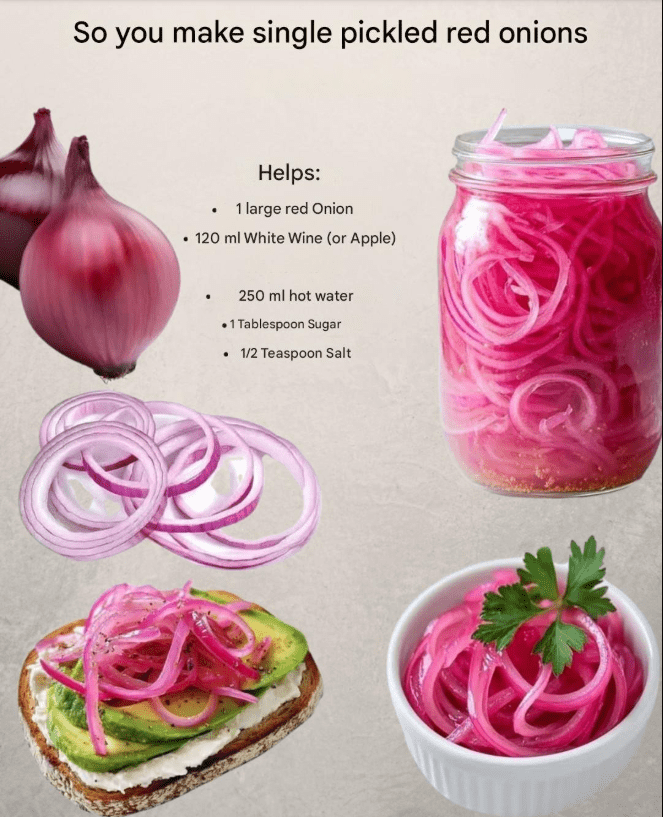
Homemade pickled red onions are one of those magical kitchen staples that elevate everything they touch. With their vibrant pink color, tangy crunch, and subtle sweetness, these quick-pickled beauties take mere minutes to prepare yet deliver restaurant-quality flavor to tacos, sandwiches, salads, and countless other dishes. If you’ve never made pickled onions at home, you’re missing out on one of the easiest and most rewarding kitchen projects imaginable.
Unlike traditional canning that requires special equipment and precise timing, quick-pickled red onions come together in about five minutes of active work. The onions then sit in their brine, transforming from sharp and pungent to mellow and tangy. Within an hour, they’re ready to use, though they only get better as they sit. The best part? They last for weeks in your refrigerator, ready whenever you need that perfect pop of acid and crunch.
Table of Contents
Why Pickled Red Onions Deserve a Spot in Your Fridge
The beauty of pickled red onions lies in their versatility. They’re not just a garnish—they’re a flavor powerhouse that can completely change the character of a dish. That sharp vinegar tang cuts through rich, fatty foods like pulled pork or cheese. The slight sweetness balances spicy dishes. The crunch adds textural contrast to soft foods like avocado toast or creamy soups.
Red onions specifically work better than white or yellow varieties for pickling. Their color transforms into stunning shades of pink and magenta when they hit the acidic brine, making them as visually appealing as they are delicious. They’re also naturally milder and slightly sweeter than other onions, which means they pickle to a perfect balance without becoming overwhelmingly sharp.
From a practical standpoint, keeping pickled onions on hand means you always have a way to brighten leftovers, dress up simple meals, or add sophistication to basic ingredients. That plain chicken breast becomes interesting. Those scrambled eggs transform into something special. Even a basic cheese sandwich gets an upgrade.
Understanding the Science of Quick Pickling
Quick pickling differs fundamentally from traditional fermentation or canning. Traditional pickling relies on lactic acid bacteria converting sugars into acid over weeks or months, creating preserved vegetables with complex flavors and long shelf life without refrigeration. Quick pickling skips the fermentation entirely, using vinegar to provide immediate acidity.
The acid in the brine serves multiple purposes. It denatures proteins in the onion cells, softening the texture while maintaining crunch. It tempers the sulfur compounds that give raw onions their sharp bite. And it creates an environment inhospitable to most bacteria, extending shelf life when combined with refrigeration.
Heat accelerates the pickling process. Pouring hot brine over the onions rather than using cold liquid speeds up the initial transformation, though both methods work. The heat also helps dissolve sugar and salt completely while slightly softening the onions for better brine absorption.
The magic happens within the first hour as the onions release their moisture into the brine while absorbing the flavored liquid. Over the next few days, the flavors continue melding and mellowing, with the onions becoming less sharp and more nuanced.
