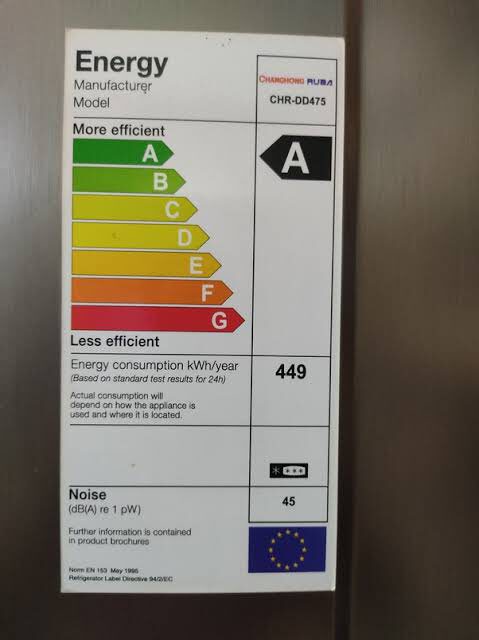
When shopping for a new refrigerator, you’ve probably noticed those colorful energy stickers plastered on the front. These labels aren’t just decorative—they’re packed with valuable information that can save you hundreds of dollars over the appliance’s lifetime. Understanding fridge energy stickers is essential for making an informed purchase that benefits both your wallet and the environment.
Table of Contents
What Are Fridge Energy Stickers?
Fridge energy stickers, officially known as EnergyGuide labels in the United States or energy rating labels in other countries, are mandatory labels that provide standardized information about an appliance’s energy consumption. These labels were introduced to help consumers compare the energy efficiency of different models before making a purchase.
The U.S. Federal Trade Commission requires manufacturers to display these labels on most household appliances, including refrigerators and freezers. The goal is simple: give shoppers the tools they need to choose energy-efficient products that will reduce electricity bills and environmental impact.
Understanding the EnergyGuide Label Components
The Yellow and Black Design
The most recognizable feature of the EnergyGuide label is its bright yellow background with black text. This distinctive color scheme makes it impossible to miss when browsing appliances in stores or online. The label contains several key pieces of information arranged in a standardized format.
Estimated Yearly Operating Cost
At the top of the label, you’ll find the estimated yearly operating cost in large numbers. This figure represents how much you can expect to pay in electricity bills to run the refrigerator for one year under typical usage conditions. This estimate is based on the national average electricity rate, which is currently around 16 cents per kilowatt-hour in the United States.
Keep in mind that your actual costs may vary depending on your local electricity rates and how you use the appliance. If your electricity costs more than the national average, expect to pay more than the estimated amount shown on the label.
Annual Energy Consumption
Below the cost estimate, you’ll see the annual energy consumption measured in kilowatt-hours (kWh). This number tells you how much electricity the refrigerator uses in a typical year. Lower numbers indicate better energy efficiency.
For context, modern Energy Star certified refrigerators typically use between 300 and 600 kWh per year, while older models can consume 1,000 kWh or more annually.
The Comparison Scale
One of the most useful features of the EnergyGuide label is the comparison scale—a horizontal bar with a triangle marker. This scale shows how the refrigerator’s energy consumption compares to similar models in its category.
The left side of the scale represents the most efficient models, while the right side shows the least efficient. The triangle points to where this particular refrigerator falls on that spectrum. Ideally, you want the triangle as far left as possible, indicating superior energy efficiency compared to competitors.
Model Information
The label also includes specific details about the refrigerator model, including the manufacturer’s name, model number, and the appliance type and size. This information helps you confirm you’re looking at the correct label for the specific refrigerator you’re considering.
What Is the Energy Star Certification?
Many refrigerators feature an additional blue Energy Star logo alongside the EnergyGuide label. This certification indicates that the appliance meets strict energy efficiency guidelines set by the U.S. Environmental Protection Agency and the Department of Energy.
Energy Star certified refrigerators use approximately 9-10% less energy than models that meet the federal minimum energy efficiency standard. Over the appliance’s lifetime, this difference can translate to significant savings—often more than $200 compared to non-certified models.
How to Read Energy Labels in Different Countries
European Union Energy Labels
If you’re shopping in Europe, you’ll encounter a different labeling system. The EU energy label uses a color-coded scale from A (dark green, most efficient) to G (red, least efficient). As of March 2021, the EU rescaled its energy ratings, eliminating the A+, A++, and A+++ categories to make the system more intuitive.
The EU label also includes pictograms showing the refrigerator’s capacity in liters, noise level in decibels, and other relevant specifications.
Australian Energy Rating Labels
Australian energy labels feature a star rating system from 1 to 10 stars, with more stars indicating better energy efficiency. The label also displays the annual energy consumption in kilowatt-hours and includes a comparative energy consumption bar.
Canadian EnerGuide Labels
Canada uses EnerGuide labels similar to the U.S. EnergyGuide system but with slight differences in design and calculation methods. These labels also show estimated annual energy consumption and operating costs.
Why Energy Efficiency Matters for Refrigerators
Financial Savings
Refrigerators run 24 hours a day, 365 days a year, making them one of the highest energy consumers in your home. An energy-efficient model can save you $50 to $100 or more annually compared to an inefficient one. Over the typical 12-15 year lifespan of a refrigerator, that’s $600 to $1,500 in savings.
Environmental Impact
Reducing energy consumption directly decreases your carbon footprint. Power plants burn fossil fuels to generate electricity, releasing greenhouse gases into the atmosphere. By choosing an efficient refrigerator, you’re helping combat climate change and reduce air pollution.
An Energy Star certified refrigerator can prevent approximately 100 pounds of carbon dioxide emissions annually compared to a standard model.
Grid Stability
When millions of households choose energy-efficient appliances, the collective reduction in electricity demand helps stabilize the power grid, particularly during peak usage times. This can help prevent blackouts and reduce the need for new power plants.
How to Compare Refrigerators Using Energy Stickers
Step One: Identify Your Needs
Before comparing energy labels, determine what size and type of refrigerator you need. Energy consumption varies significantly between compact models, standard top-freezer units, side-by-side models, and French-door refrigerators. Compare only models within the same category for accurate results.
Step Two: Check the Comparison Range
Look at the scale on the EnergyGuide label to see the range of energy consumption for similar models. This gives you context for what’s considered efficient in that category. A model that uses energy near the left end of the scale is a good choice.
Step Three: Calculate Long-Term Costs
Don’t focus solely on the purchase price. Calculate the total cost of ownership by adding the purchase price to the estimated operating costs over the appliance’s expected lifespan. A more expensive, energy-efficient model often costs less overall than a cheaper, inefficient one.
Step Four: Look for Energy Star Certification
When comparing similar models, give preference to those with Energy Star certification. The additional efficiency can provide meaningful savings without sacrificing performance or features.
Common Misconceptions About Fridge Energy Stickers
“A Bigger Fridge Always Uses More Energy”
While larger refrigerators generally consume more energy than smaller ones, this isn’t always true. Technology and design play crucial roles. A new, large, energy-efficient refrigerator might use less electricity than an older, smaller, inefficient model.
“The Estimated Cost Is Exact”
The operating cost shown on the label is an estimate based on national average electricity rates and typical usage patterns. Your actual costs depend on your local utility rates, how often you open the door, how full you keep the fridge, and your thermostat settings.
“All Features Are Equal”
Energy labels don’t account for features like ice makers, water dispensers, or smart technology, which can increase energy consumption. When comparing models, consider whether these features are worth the additional energy cost.
Tips for Maximizing Your Refrigerator’s Energy Efficiency
Proper Placement
Position your refrigerator away from heat sources like ovens, dishwashers, and direct sunlight. Leave adequate space around the unit for air circulation—typically two to three inches on all sides.
Maintain Optimal Temperature Settings
Set your refrigerator between 37-40°F (3-4°C) and your freezer at 0°F (-18°C). Temperatures colder than necessary waste energy without providing additional food safety benefits.
Regular Maintenance
Clean the condenser coils at least twice a year to maintain efficiency. Check door seals regularly to ensure they’re airtight. Replace worn gaskets promptly to prevent cool air from escaping.
Smart Usage Habits
Minimize door-opening time and frequency. Let hot foods cool to room temperature before refrigerating them. Keep your refrigerator reasonably full, as stored items help maintain temperature when the door opens.
When to Replace Your Old Refrigerator
If your refrigerator is more than 10-15 years old, it’s likely consuming significantly more energy than modern models. Older refrigerators manufactured before 2000 can use up to three times more electricity than current Energy Star certified models.
Calculate your current refrigerator’s annual operating cost using your electricity rate and estimated consumption. Compare this to the operating cost of a new, efficient model. If the energy savings plus any available rebates can offset the purchase price within a reasonable timeframe—typically 5-8 years—replacement makes financial sense.
Many utility companies offer rebates for purchasing Energy Star certified appliances or recycling old, inefficient refrigerators. Check with your local provider to see what incentives are available.
The Future of Refrigerator Energy Efficiency
Refrigerator technology continues to evolve, with manufacturers developing increasingly efficient models. Innovations like variable-speed compressors, advanced insulation materials, and smart sensors that adjust cooling based on usage patterns are pushing the boundaries of efficiency.
Smart refrigerators can also track their energy consumption and provide recommendations for optimization through mobile apps. Some models can even adjust their operation during off-peak electricity hours when rates are lower, further reducing operating costs.
As energy standards become more stringent worldwide, tomorrow’s refrigerators will use even less electricity while offering enhanced features and performance. Staying informed about energy labels ensures you’ll always make the best choice for your needs and budget.
Making Your Final Decision
Understanding fridge energy stickers empowers you to make smarter purchasing decisions. These labels provide transparent, standardized information that takes the guesswork out of comparing appliances. By choosing an energy-efficient refrigerator, you’re making an investment that pays dividends through lower electricity bills, reduced environmental impact, and reliable performance.
Take the time to read and compare energy labels carefully. Consider the total cost of ownership rather than just the sticker price. Look for Energy Star certification when possible. With this knowledge, you’re ready to select a refrigerator that serves your family well while keeping your energy consumption—and your bills—as low as possible.
