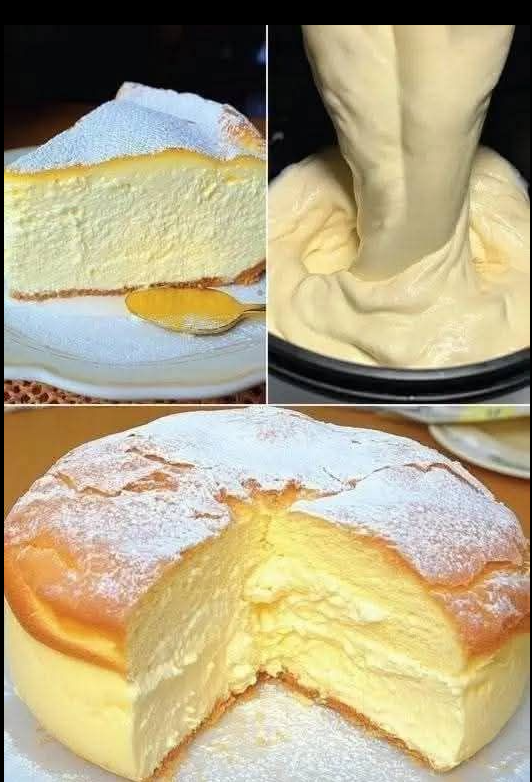
Cloud Cake has become the latest sensation in the world of home baking, and for good reason. It delivers an unbelievably light, airy, and melt-in-your-mouth texture that traditional cheesecakes can only dream of. But what if I told you that achieving this divine dessert doesn’t require complex folding, endless whisking, or special equipment? Forget separating eggs and mastering the art of the bain-marie; the secret to this version of the Japanese-style cotton cheesecake lies in one incredible, time-saving trick: throwing almost everything into your blender! This revolutionary method simplifies the preparation process dramatically, making the dream of a perfect, towering, jiggly cake accessible to even the most novice baker.
Table of Contents
What Exactly is This Magical ‘Cloud Cake’?
The dessert often referred to as Cloud Cake is a variation of the Japanese Soufflé Cheesecake or Cotton Cheesecake. Unlike the dense, creamy New York-style cheesecake, this cake is celebrated for its ethereal lightness—like eating a sweet, creamy cloud. The texture is achieved through a careful balance of ingredients and a specific baking method, traditionally involving whipping egg whites to stiff peaks and gently folding them into a custard base. The hallmark of a truly great one is that signature jiggle and its height, which comes from the air incorporated into the batter. Our “blender” approach doesn’t compromise on that texture; it just shortcuts the heavy manual labor involved in combining the base ingredients. It’s a modern twist on a classic, aiming for maximum impact with minimum fuss.
The Blender Revolution: Preparation Simplified
The genius of the “just put everything in the blender” technique lies in how effortlessly it creates a perfectly smooth, lump-free batter base. By rapidly blending the wet ingredients and flavorings, you fully emulsify the fats and liquids, which is crucial for a stable, high-rising cake.
The Creamy Base (Blender Steps)
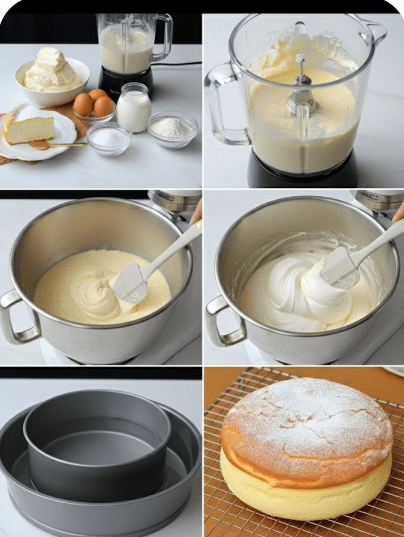
- Prep the Wet Ingredients: In the blender, combine softened cream cheese, granulated sugar, egg yolks, whole milk, and a touch of vanilla extract.
- Blend Until Silky: Secure the lid and blend on medium speed for about 60 to 90 seconds. The mixture should transform into a completely smooth, pourable liquid with no visible specks of cream cheese. This is a much faster and more reliable way to achieve smoothness than hand-whisking!
- Add Dry Ingredients: Now, stop the blender, scrape down the sides, and add your sifted flour (traditionally cake flour is used for the softest crumb) and a pinch of cornstarch. Pulse gently a few times until just combined. Over-blending the flour is a major no-no, as it can develop gluten and make your cake tough, so only pulse until incorporated.
The Air Element (The Necessary Exception)
While the base goes into the blender, there’s one step you can’t skip: the egg whites. The structural integrity and height of the Cloud Cake rely entirely on the volume and stability of meringue. You must whisk the egg whites (with a little cream of tartar or lemon juice for stability) in a separate, clean bowl until they form firm, glossy peaks. This is the air that creates the cloud!
Gentle Combination and Baking
The final, critical step is to fold the meringue into the batter gently. Use a spatula to incorporate about one-third of the meringue first to lighten the batter, and then fold in the remaining two-thirds, taking care not to deflate the air. Bake the batter in a springform pan using a traditional water bath (bain-marie) for consistent, even heat. The slow, moist cooking environment is essential to prevent cracking and ensure that signature jiggly texture.
Tips for a Perfect, Crack-Free Cloud Cake
Achieving that flawless, uncracked golden top can feel like chasing a mythical creature, but a few key steps will dramatically increase your success rate.
- Temperature Matters: Ensure all cold ingredients, especially the cream cheese and milk, are at room temperature before blending. This guarantees a smooth emulsion.
- Don’t Rush the Rise: The water bath is non-negotiable. The steam prevents the edges from setting too quickly, which is the main culprit for cracks. Use hot water and ensure it comes about halfway up the side of your cake pan.
- Cool Down Slowly: Once baked, turn off the oven and leave the cake inside for 30 minutes with the door ajar. Rapid temperature changes cause the cake to deflate and wrinkle. This slow cooling process is vital for maintaining its structure and height. According to traditional Japanese baking methods, patience in cooling is as important as the mixing itself.
- Perfect Serving: Serve chilled and dusted generously with powdered sugar for a snowy, cloud-like appearance! 😋
Bake Your Cloud Today
This blender-friendly approach to making Cloud Cake truly takes the intimidation out of baking a traditionally delicate dessert. It proves that culinary shortcuts don’t always mean sacrificing quality; sometimes, they just mean smarter kitchen work. The result is a stunningly light dessert perfect for any occasion, from a simple family gathering to an elegant holiday feast.
Have you tried any unconventional baking methods that turned out to be game-changers? Share your favorite shortcut below!
