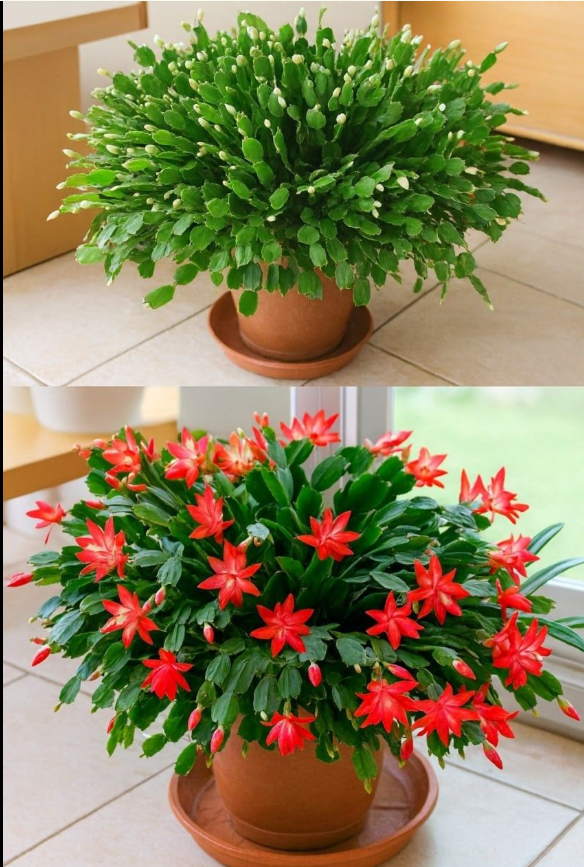
Christmas cactus bloom success is often the highlight of a gardener’s winter season, bringing vibrant life to indoor spaces when everything outside is dormant. While these stunning succulents are famous for their holiday display, getting them to produce those iconic tubular flowers can sometimes feel like a challenge. Fortunately, you can trigger a massive Christmas cactus bloom using common items already found in your pantry.
Table of Contents
The Secret Kitchen Fertilizer Ingredients
To encourage a spectacular Christmas cactus bloom, you do not need expensive chemicals. This organic “tea” uses minerals to strengthen the plant’s vascular system and provide the phosphorus needed for bud development.
- 1 tablespoon of Unsulfured Blackstrap Molasses
- 1 quart of Filtered Water (Room Temperature)
- 1 teaspoon of Epsom Salts (Magnesium Sulfate)
- 1 Eggshell (Dried and finely crushed)
Step-by-Step Preparation for Maximum Flowering
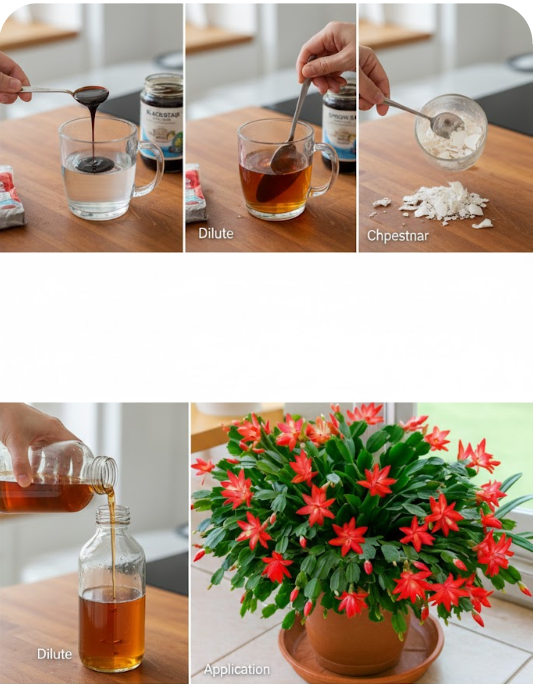
1. Prepare the Base: Start by heating one cup of your filtered water until it is warm but not boiling. This helps the solids dissolve more effectively.
2. Dissolve the Nutrients: Stir the molasses and the Epsom salts into the warm water until the liquid is uniform. The molasses provides potassium and trace minerals, while the magnesium in the salts is crucial for a healthy Christmas cactus bloom.
3. Incorporate the Calcium: Add your finely crushed eggshells to the mixture. If you want a faster release, you can grind the shells into a fine powder using a coffee grinder.
4. Dilute the Mixture: Pour the concentrated solution into the remaining three cups of room-temperature water. Stir well to ensure the nutrients are evenly distributed.
5. Application: Water your plant with this solution once every two weeks starting in October. Stop the treatment once the first flower buds begin to open to avoid over-stimulating the plant during its peak display. 🌸
Understanding the Christmas Cactus Bloom Cycle
A Christmas cactus bloom is triggered by two primary environmental factors: light and temperature. These plants are “short-day” photoperiodic, meaning they require long periods of uninterrupted darkness—usually 12 to 14 hours—to set buds. If you keep your plant in a room where artificial lights are turned on at night, it may never realize it is time to flower.
Temperature also plays a pivotal role in the Christmas cactus bloom process. These plants prefer cooler environments during the budding phase. Keeping the plant in a spot that stays around 55°F to 60°F (13°C to 15°C) will encourage more prolific budding than a room kept at a constant 72°F (22°C).
Vital Tips for Maintenance and Health
To sustain a long-lasting Christmas cactus bloom, consistency is your best friend. Unlike desert cacti, these are tropical epiphytes that live in rainforests. They enjoy high humidity and soil that stays slightly moist but never soggy.
- Avoid Moving the Pot: Once you see buds forming, do not move the plant. Changes in light orientation or sudden drafts can cause “bud drop,” where the plant prematurely sheds its flowers.
- Post-Bloom Care: After the Christmas cactus bloom has faded, give the plant a rest period with less water for about six weeks to allow it to recover its energy. 🌿
Nutrition Facts for Your Plant Feed
While not for human consumption, this “recipe” provides a specific nutritional profile tailored for epiphytic cacti:
- Magnesium: 490 mg (from Epsom salts)
- Potassium: 290 mg (from molasses)
- Calcium: 50 mg (from eggshells)
- Sugars: 12g (to fuel soil microbes)
Serving and Storage Tips for Your Cactus Remedy
This nutrient boost is best served “fresh” to your plants. If you have leftovers, store the liquid in a glass jar in a cool, dark place for no more than three days. Because of the natural sugars in the molasses, it can ferment if left out too long. Always ensure the liquid is at room temperature before pouring it into the soil; cold water can shock the root system and halt a Christmas cactus bloom in its tracks.
Frequently Asked Questions
Why are my buds falling off before they open?
This is usually caused by a sudden change in temperature, overwatering, or moving the plant to a different location during the sensitive budding stage.
Can I use white sugar instead of molasses?
No, white sugar lacks the essential minerals (iron, potassium, and calcium) that molasses provides to support a healthy Christmas cactus bloom. 🌵
Conclusion
Achieving a vibrant, head-turning Christmas cactus bloom is a rewarding experience that connects you to the natural rhythm of the seasons. By combining the right environmental triggers with this simple kitchen-based nutrient boost, you can transform a simple green plant into a holiday masterpiece.
Watching those first tiny buds swell into brilliant red or pink flowers is a joy every indoor gardener should experience. Have you tried any unique home remedies for your succulents this year, or do you have a favorite spot in your home where your cacti always seem to thrive? Feel free to share your success stories and tips with the community!
