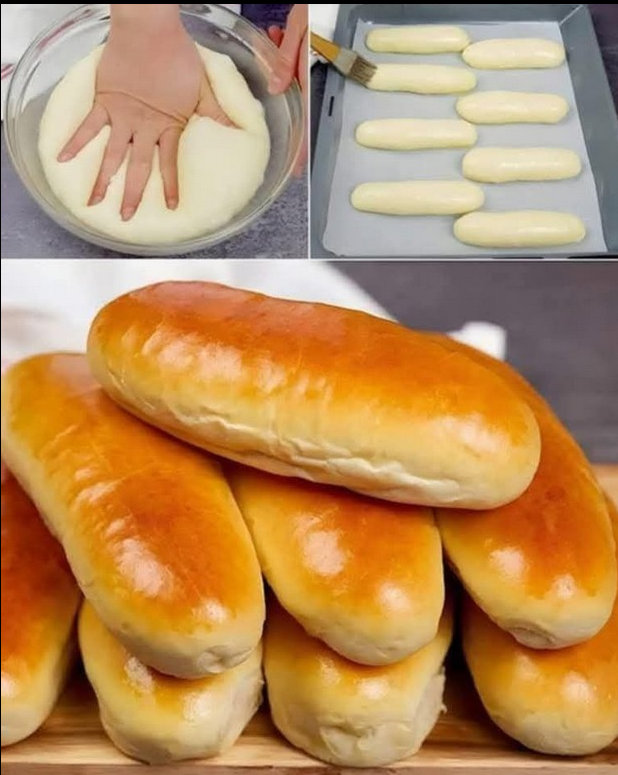
Ultra Soft Japanese Milk Buns are an absolute revelation in the world of baking. If you’ve ever wondered how bread can be so incredibly light, fluffy, and tender that it practically melts in your mouth, you’ve found the answer. This isn’t just a loaf; it’s a culinary experience, resulting in beautiful, golden-brown rolls perfect for any meal or snack. Let’s dive into the simple magic behind these irresistible buns.
Table of Contents
🍞 The Magic of Tangzhong: An Ancient Asian Technique
The unparalleled softness of these buns comes from a crucial technique called Tangzhong, or “water roux.” This method involves cooking a small portion of the flour and liquid (milk or water) until it forms a thick, paste-like consistency, similar to a roux. This cooked mixture is then added to the main dough.
When the flour is cooked with liquid, its starch molecules gelatinize, allowing them to absorb and retain significantly more moisture. This increased hydration keeps the final product incredibly soft and extends the bread’s shelf life, preventing it from drying out quickly. It’s a simple step that transforms an ordinary bread recipe into something extraordinary!
📝 Recipe for Ultra Soft Japanese Milk Buns
This recipe yields bread that is wonderfully rich, airy, and delicately sweet.
Ingredients
For the Tangzhong
- 2 tablespoons (20g) bread flour
- 1/2 cup (120ml) milk
For the Dough
- 2 1/2 cups (300g) bread flour
- 1/4 cup (50g) granulated sugar
- 1 teaspoon salt
- 2 1/4 teaspoons active dry yeast
- 1/2 cup (120ml) warm milk (about 105°F to 115°F)
- 1 large egg
- 4 tablespoons (56g) unsalted butter, softened
For the Egg Wash
- 1 large egg
- 1 tablespoon milk
Preparation
1. Make the Tangzhong:
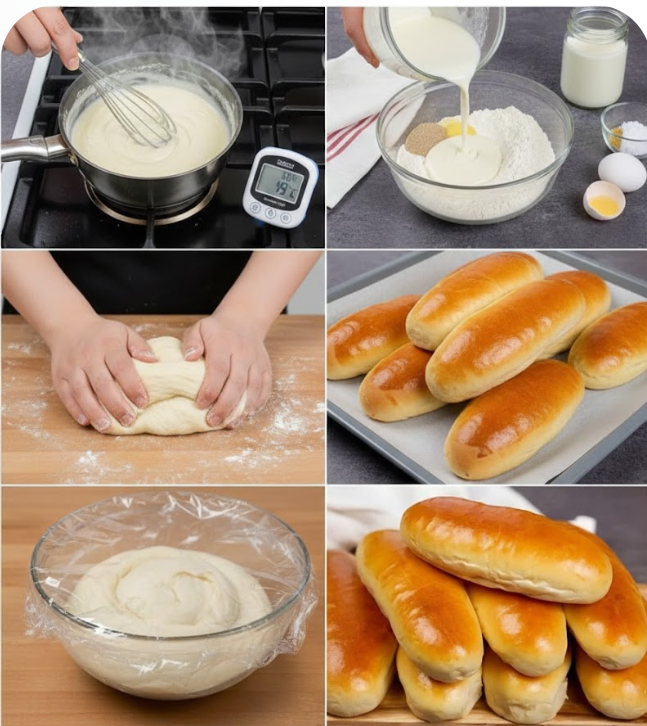
- 1. Whisk the flour and milk in a small saucepan until smooth.
- 2. Cook over medium-low heat, stirring constantly, until the mixture thickens into a paste (the temperature should reach 149°F/65°C, or simply until lines appear when you drag a spatula across the bottom).
- 3. Remove from heat and let cool to room temperature.
2. Prepare the Dough:
- 4. In a large bowl, whisk together the bread flour, sugar, salt, and yeast.
- 5. Add the warm milk, egg, and the cooled Tangzhong mixture. Mix until a shaggy dough forms.
- 6. Knead the dough for about 5 minutes. Then, add the softened butter and continue kneading until the dough is smooth, elastic, and passes the windowpane test (about 10–15 minutes total).
3. Rise and Shape:
- 7. Place the dough in a lightly oiled bowl, cover, and let rise in a warm place until doubled in size (about 1 to 1.5 hours).
- 8. Punch down the dough gently. Divide it into 8 equal pieces.
- 9. Shape each piece into an oval or traditional long bun shape and place them on a parchment-lined baking sheet.
- 10. Cover and let the buns proof for a second time until puffy (about 30–45 minutes). Preheat your oven to 350°F (175°C) during this time.
4. Bake:
- 11. Gently brush the buns with the egg wash (whisked egg and milk).
- 12. Bake for 15–20 minutes, or until they are a beautiful golden brown color 🌟.
✨ Tips for the Ultimate Fluffiness
For the absolute best results, ensure your flour is high-protein bread flour, not all-purpose. The extra gluten is essential for trapping the steam and air, resulting in that signature pillowy texture. Also, take your time with the kneading and rising; they are key to developing the structure and flavor. The effort is minimal, but the reward is a heavenly, sweet aroma filling your kitchen! 😋
These Ultra Soft Japanese Milk Buns are truly a testament to how small technical changes can yield extraordinary baking results. Whether you enjoy them plain, toasted with butter, or stuffed with a savory filling, they are guaranteed to become a household favorite.
Have you tried the Tangzhong method before? What’s your favorite topping for a sweet, soft milk bun? Let me know in the comments below! 👇
