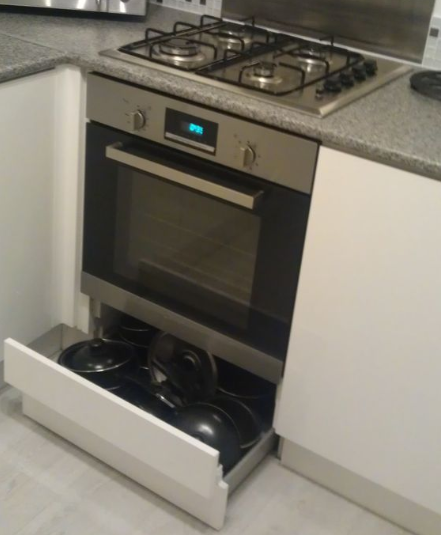
That drawer under your stove has probably been part of your kitchen for years, quietly sitting there while you cook meal after meal. If you’re like most people, you’ve been using it to store pots, pans, baking sheets, or perhaps those awkward pizza stones that don’t fit anywhere else. But here’s something that might surprise you: the drawer under your stove isn’t actually designed to be a storage space in many cases. In fact, you might have been using this handy kitchen feature incorrectly all along.
The truth is, that mysterious bottom drawer serves different purposes depending on what type of stove you own, and understanding its real function can actually improve your cooking experience and kitchen safety. Let’s dive into what manufacturers actually intended for this often-misunderstood kitchen feature and how you can use it properly.
Table of Contents
The Three Types of Stove Drawers You Need to Know
Not all stove drawers are created equal, and that’s where the confusion begins. Depending on your stove model and when it was manufactured, your drawer could be one of three distinct types. Identifying which type you have is the first step to using it correctly.
The Warming Drawer: Keeping Food at Perfect Temperature
If your stove is a mid-range to high-end model, especially one purchased in the last couple of decades, there’s a good chance that drawer is actually a warming drawer. This feature is designed to keep cooked food at an ideal serving temperature without continuing to cook it or drying it out.
Warming drawers typically have their own temperature controls, often located on the control panel of your stove or sometimes on the drawer itself. You might see settings labeled as “low,” “medium,” and “high,” or specific temperature ranges usually between 140°F and 200°F. Some luxury models even have humidity controls to prevent certain foods from drying out.
The purpose of a warming drawer is brilliantly practical. Imagine you’re cooking a multi-course meal where different dishes finish at different times. Your roasted vegetables are done, but your chicken needs another fifteen minutes. Instead of letting those vegetables cool on the counter or risk overcooking them by leaving them in the oven, you can slide them into the warming drawer where they’ll maintain their temperature and texture until you’re ready to serve.
The Broiler Drawer: Old-School Cooking Power
If you have an older gas stove, particularly one manufactured before the 1980s or 1990s, that bottom drawer might actually be a broiler. Yes, an entire separate cooking compartment that many homeowners never realized they had!
Broiler drawers were common in vintage gas ranges and work by using the heat from the main oven’s burner. When you pull out the drawer, you’ll typically see a metal rack that slides in and out, similar to what you’d find inside your main oven. The heating element or flame is located at the top of this compartment, making it perfect for broiling meats, melting cheese, or getting that perfect golden crust on dishes.
Using a broiler drawer is different from using your main oven’s broiler. Because it’s a separate compartment closer to the floor, you have better control over the distance between your food and the heat source. This makes it easier to achieve that caramelized exterior without overcooking the interior.
